Back to the main page Back to category Mandolins
musical instrument details
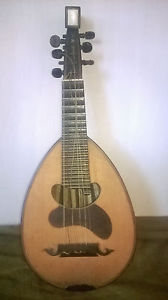
mandolino OLD MANDOLIN ENRICO ROCCA 1889 RARO MANDOLINO ANTICO
Estimated price for orientation: 4 500 $
Category: Mandolins
Class:
Description Condition: Used: An item that has been used previously. The item may have some signs of cosmetic wear, but is fully operational and functions as intended. This item may be a floor model or store return that has been used. See the seller’s listing for full details and description of any imperfections. See all condition definitions- opens in a new window or tab ... Read moreabout the condition Marca: ROCCA Materiale corpo: Acero Anno di costruzione: Prima del 1900
Liutaio: Enrico Rocca Antico mandolino del 1889 "ROCCA ENRICO FU GIUSEPPE FECE IN GENOVA 1889
conservato in ottime condizioni,all'interno riporta la scritta sopracitata e un'insieme di carta con note musicali e chiaramente la sua firma .
La particolarità è che per leggere all'interno bisogna porlo d'avanti ad uno specchio perchè è tutto scritto al contrario.
Le corde sono in budello ,sul ricciolo cè Madreperla ,il piano armonico è in Abete e il guscio a doghe bicolore è di Acero marezzato e Palissandro
Misura cm 56,5 x22.ATTENZIONE QUELLO CHE SI VEDE IN FOTOGRAFIA DEL MUSEO DELLA MUSICA E'UN MANDOLINO UGUALE DEL 1888 NEL MUSEO.fotografia 11 e 12 Enrico Rocca fu un figlio d’arte sui generis. Nacque infatti a Torino nel 1847 dal celebre Giuseppe. Nel 1850 rimase orfano di madre verso il 1853 si portò a Genova insieme al padre.
Dopo appena pochi anni sembra che non vivesse già più con la famiglia.
Nel 1866, un anno dopo la morte del padre, Enrico viveva da solo e faceva il barcaiolo. Dopo il militare fu maestro d’ascia nei cantieri navali di Genova. E’ solo con la fine degli anni Settanta che iniziò ad occuparsi di liuteria, realizzando in particolare mandolini. Partecipò a diverse esposizioni quali Milano, Arezzo, Torino, Genova e Anversa presentando strumenti a pizzico.
E’ solo nel 1894 che, partecipando ad una mostra milanese, presentò per la prima volta strumenti ad arco: lo stesso farà nel 1898 a una mostra torinese.
Alla morte di Eugenio Praga fu interpellato dal comune di Genova per la conservazione del violino di Paganini. Morì a Genova nel 1915.
Secondo i più, Enrico Rocca non imparò il mestiere dal padre bensì da qualche liutaio genovese, forse Praga. Infatti lo stile di Enrico si differenzia da quello del padre e sebbene in un dato periodo sembra recuperare modelli familiari, lo fece sempre con una spontaneità piuttosto evidente. Utilizzò prevalentemente il modello del “Cannone” di Paganini, oltre ad altri modelli classici. Old mandolin of 1889 "ROCCA ENRICO GIUSEPPE FU MADE IN GENOA 1889 kept in excellent condition, inside it has the words above mentioned and a set of paper with musical notes and clearly his signature. The peculiarity is that you have to place it inside to read the back of a mirror because it's all spelled backwards. The strings are gut, the curl there is Nacre, the soundboard is spruce and the shell in two-tone slats is flamed maple and rosewood Measuring 56.5 cm x22. CAREFUL WHAT YOU SEE IN THE PHOTOGRAPH OF MUSIC MUSEUM IT'SA MANDOLINO EQUAL OF 1888 IN MUSEO.fotografia 11:12
Enrico Rocca was a son of art sui generis. In fact he was born in Turin in 1847 by the famous Giuseppe. In 1850 he remained motherless towards 1853 he went to Genoa with his father. After just a few years it seems that he did not live already more with family. In 1866, a year after the death of his father, Henry lived alone and was the boatman. After the military was carpenter in the shipyards of Genoa. And 'only with the end of the seventies which began to take care of violin making, especially making mandolins. He participated in several exhibitions such as Milan, Arezzo, Turin, Genoa and Antwerp presenting plucked instruments. It 's just that in 1894, participating in a Milan exhibition, presented for the first time string instruments: the same will in 1898 to an exhibition in Turin. On the death of Eugenio Praga it was approached by the municipality of Genoa for the conservation of Paganini's violin. He died in Genoa in 1915. According to the most, Enrico Rocca not learned the trade from his father but by some Genoese luthier, perhaps Prague. In fact, the style of Henry differs from that of the father and although in a given period seems retrieve family models, he always did so with a rather obvious spontaneity. Mainly he used the model of the "Cannone" Paganini, as well as other classic models.
Description
| Condition: | Used: An item that has been used previously. The item may have some signs of cosmetic wear, but is fully operational and functions as intended. This item may be a floor model or store return that has been used. See the seller’s listing for full details and description of any imperfections. See all condition definitions- opens in a new window or tab ... Read moreabout the condition | Marca: | ROCCA |
| Materiale corpo: | Acero | Anno di costruzione: | Prima del 1900 |
Liutaio: Enrico Rocca Antico mandolino del 1889 "ROCCA ENRICO FU GIUSEPPE FECE IN GENOVA 1889
conservato in ottime condizioni,all'interno riporta la scritta sopracitata e un'insieme di carta con note musicali e chiaramente la sua firma .
La particolarità è che per leggere all'interno bisogna porlo d'avanti ad uno specchio perchè è tutto scritto al contrario.
Le corde sono in budello ,sul ricciolo cè Madreperla ,il piano armonico è in Abete e il guscio a doghe bicolore è di Acero marezzato e Palissandro
Misura cm 56,5 x22.ATTENZIONE QUELLO CHE SI VEDE IN FOTOGRAFIA DEL MUSEO DELLA MUSICA E'UN MANDOLINO UGUALE DEL 1888 NEL MUSEO.fotografia 11 e 12 Enrico Rocca fu un figlio d’arte sui generis. Nacque infatti a Torino nel 1847 dal celebre Giuseppe. Nel 1850 rimase orfano di madre verso il 1853 si portò a Genova insieme al padre.
Dopo appena pochi anni sembra che non vivesse già più con la famiglia.
Nel 1866, un anno dopo la morte del padre, Enrico viveva da solo e faceva il barcaiolo. Dopo il militare fu maestro d’ascia nei cantieri navali di Genova. E’ solo con la fine degli anni Settanta che iniziò ad occuparsi di liuteria, realizzando in particolare mandolini. Partecipò a diverse esposizioni quali Milano, Arezzo, Torino, Genova e Anversa presentando strumenti a pizzico.
E’ solo nel 1894 che, partecipando ad una mostra milanese, presentò per la prima volta strumenti ad arco: lo stesso farà nel 1898 a una mostra torinese.
Alla morte di Eugenio Praga fu interpellato dal comune di Genova per la conservazione del violino di Paganini. Morì a Genova nel 1915.
Secondo i più, Enrico Rocca non imparò il mestiere dal padre bensì da qualche liutaio genovese, forse Praga. Infatti lo stile di Enrico si differenzia da quello del padre e sebbene in un dato periodo sembra recuperare modelli familiari, lo fece sempre con una spontaneità piuttosto evidente. Utilizzò prevalentemente il modello del “Cannone” di Paganini, oltre ad altri modelli classici. Old mandolin of 1889 "ROCCA ENRICO GIUSEPPE FU MADE IN GENOA 1889 kept in excellent condition, inside it has the words above mentioned and a set of paper with musical notes and clearly his signature. The peculiarity is that you have to place it inside to read the back of a mirror because it's all spelled backwards. The strings are gut, the curl there is Nacre, the soundboard is spruce and the shell in two-tone slats is flamed maple and rosewood Measuring 56.5 cm x22. CAREFUL WHAT YOU SEE IN THE PHOTOGRAPH OF MUSIC MUSEUM IT'SA MANDOLINO EQUAL OF 1888 IN MUSEO.fotografia 11:12
Enrico Rocca was a son of art sui generis. In fact he was born in Turin in 1847 by the famous Giuseppe. In 1850 he remained motherless towards 1853 he went to Genoa with his father. After just a few years it seems that he did not live already more with family. In 1866, a year after the death of his father, Henry lived alone and was the boatman. After the military was carpenter in the shipyards of Genoa. And 'only with the end of the seventies which began to take care of violin making, especially making mandolins. He participated in several exhibitions such as Milan, Arezzo, Turin, Genoa and Antwerp presenting plucked instruments. It 's just that in 1894, participating in a Milan exhibition, presented for the first time string instruments: the same will in 1898 to an exhibition in Turin. On the death of Eugenio Praga it was approached by the municipality of Genoa for the conservation of Paganini's violin. He died in Genoa in 1915. According to the most, Enrico Rocca not learned the trade from his father but by some Genoese luthier, perhaps Prague. In fact, the style of Henry differs from that of the father and although in a given period seems retrieve family models, he always did so with a rather obvious spontaneity. Mainly he used the model of the "Cannone" Paganini, as well as other classic models.
conservato in ottime condizioni,all'interno riporta la scritta sopracitata e un'insieme di carta con note musicali e chiaramente la sua firma .
La particolarità è che per leggere all'interno bisogna porlo d'avanti ad uno specchio perchè è tutto scritto al contrario.
Le corde sono in budello ,sul ricciolo cè Madreperla ,il piano armonico è in Abete e il guscio a doghe bicolore è di Acero marezzato e Palissandro
Misura cm 56,5 x22.ATTENZIONE QUELLO CHE SI VEDE IN FOTOGRAFIA DEL MUSEO DELLA MUSICA E'UN MANDOLINO UGUALE DEL 1888 NEL MUSEO.fotografia 11 e 12 Enrico Rocca fu un figlio d’arte sui generis. Nacque infatti a Torino nel 1847 dal celebre Giuseppe. Nel 1850 rimase orfano di madre verso il 1853 si portò a Genova insieme al padre.
Dopo appena pochi anni sembra che non vivesse già più con la famiglia.
Nel 1866, un anno dopo la morte del padre, Enrico viveva da solo e faceva il barcaiolo. Dopo il militare fu maestro d’ascia nei cantieri navali di Genova. E’ solo con la fine degli anni Settanta che iniziò ad occuparsi di liuteria, realizzando in particolare mandolini. Partecipò a diverse esposizioni quali Milano, Arezzo, Torino, Genova e Anversa presentando strumenti a pizzico.
E’ solo nel 1894 che, partecipando ad una mostra milanese, presentò per la prima volta strumenti ad arco: lo stesso farà nel 1898 a una mostra torinese.
Alla morte di Eugenio Praga fu interpellato dal comune di Genova per la conservazione del violino di Paganini. Morì a Genova nel 1915.
Secondo i più, Enrico Rocca non imparò il mestiere dal padre bensì da qualche liutaio genovese, forse Praga. Infatti lo stile di Enrico si differenzia da quello del padre e sebbene in un dato periodo sembra recuperare modelli familiari, lo fece sempre con una spontaneità piuttosto evidente. Utilizzò prevalentemente il modello del “Cannone” di Paganini, oltre ad altri modelli classici. Old mandolin of 1889 "ROCCA ENRICO GIUSEPPE FU MADE IN GENOA 1889 kept in excellent condition, inside it has the words above mentioned and a set of paper with musical notes and clearly his signature. The peculiarity is that you have to place it inside to read the back of a mirror because it's all spelled backwards. The strings are gut, the curl there is Nacre, the soundboard is spruce and the shell in two-tone slats is flamed maple and rosewood Measuring 56.5 cm x22. CAREFUL WHAT YOU SEE IN THE PHOTOGRAPH OF MUSIC MUSEUM IT'SA MANDOLINO EQUAL OF 1888 IN MUSEO.fotografia 11:12
Enrico Rocca was a son of art sui generis. In fact he was born in Turin in 1847 by the famous Giuseppe. In 1850 he remained motherless towards 1853 he went to Genoa with his father. After just a few years it seems that he did not live already more with family. In 1866, a year after the death of his father, Henry lived alone and was the boatman. After the military was carpenter in the shipyards of Genoa. And 'only with the end of the seventies which began to take care of violin making, especially making mandolins. He participated in several exhibitions such as Milan, Arezzo, Turin, Genoa and Antwerp presenting plucked instruments. It 's just that in 1894, participating in a Milan exhibition, presented for the first time string instruments: the same will in 1898 to an exhibition in Turin. On the death of Eugenio Praga it was approached by the municipality of Genoa for the conservation of Paganini's violin. He died in Genoa in 1915. According to the most, Enrico Rocca not learned the trade from his father but by some Genoese luthier, perhaps Prague. In fact, the style of Henry differs from that of the father and although in a given period seems retrieve family models, he always did so with a rather obvious spontaneity. Mainly he used the model of the "Cannone" Paganini, as well as other classic models.