Back to the main page Back to category Other Pro Audio Equipment
musical instrument details
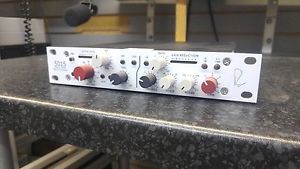
Rupert Neve Design 5015 Mic Pre-Comp
Estimated price for orientation: 1 599 $
Category: Other Pro Audio Equipment
Class:
Description
- Will ship to U.S., Europe and more. For shipping cost, please contact us with adresse and postal/zip code.-PLEASE ASK ANY QUESTIONS YOU MAY HAVE PRIOR TO BIDDING ON THIS ITEM--IF SHIPPED WITHIN CANADA, APPLICABLE TAXES WILL BE CHARGED, SO PLEASE WAIT FOR US TO SEND YOU AN INVOICE BEFORE MAKING YOUR PAYMENT-Canadian residents please add the following amounts for taxes based on province of residence:Newfoundland: 13%PEI: 14%Nova Scotia: 13%New Brunswick: 13%Quebec: 14.98%Ontario: 13%Manitoba: 5%Saskatchewan: 5%Alberta: 5%British Columbia: 12%NWT/NU: 5%YT: 5%-WE WILL ONLY SHIP TO THE ADDRESS THAT IS ASSIGNED TO YOUR PAYPAL ACCOUNT--WE WILL NEED YOUR PHONE NUMBER TO COMPLETE THE TRANSACTION--SHIPPING DOES NOT INCLUDE DUTIES OR STATE TAXES. THIS IS THE RESPONSIBILITY OF THE BUYER.***Steve's Music Store has been in business since 1965***With independent transformer-coupled mic preamp and compressor-limiter sections identical to those found in the 5012 and 5043 modules, the fully analogue Portico 5015 combines the outstanding sound quality expected from a Rupert Neve design with the total flexibility required by modern recording studios. Available in both vertical and horizontal configurations, when used with the it is possible to create a Portico channel strip with preamplification, dynamics processing and equalization. As an additional routing option, the mic pre output may be routed directly to the compressor section without patching by pressing the To Comp switch.The Microphone PreamplifierThe microphone input is balanced but not floating, using a Transformer-Like-Amplifier (T.L.A.) configuration with a toroidal Common Mode Rejection Low Pass Filter that excludes frequencies above 150 kHz. The T.L.A. is followed by an actual input transformer designed by Mr. Neve that permits a full +25 dBu input signal to be handled at unity gain without an input pad over the whole audio spectrum. This innovative solution combines the advantages of both an electronically-balanced and true transformer input.In addition to the 72 dB of gain, the 5015 mic pre includes individually selectable phase, mute, phantom power, a swept high pass filter from 20-250 Hz, and the Silk circuit which yields the rich warmth and presence of the renowned classic designs.The Compressor SectionThe 5015’s compressor has fully variable threshold, ratio, attack, release and makeup gain with two selectable VCA modes that provide for exceptional control of any source material.To control gain, a V.C.A. or Voltage Controlled Amplifier (or Attenuator) is used. There are many types of voltage control devices, including tubes, discrete and integrated solid state circuits and naturally non-linear devices, each one having its own characteristic behavior that reflects sonically on the final performance, providing a character or signature that can be musically attractive (or not!). The Portico 5043 makes use of a very accurate, low noise, low distortion V.C.A. having essentially no signature of its own.A part of the audio signal is rectified and smoothed to produce a suitable control voltage for the V.C.A., which has to respond very quickly and have low distortion. If the response is too fast, some of the signal will be unnecessarily gain-controlled. If the response is too slow, the signal will overshoot and the first few cycles will not get compressed. The speed and accuracy of the response – known as the "attack" – and the timeframe that gain remains under the initial control – known as the "release" or "recovery" – each play a large part in the way a compressor sounds.LOW NOISE, LOW DISTORTION OPERATIONMuch care was given in designing the 5015 to produce as little noise and non-harmonic distortion as possible. Carefully implemented signal paths and Class A operation are a large part of the 5015′s sweet, whisper-quiet performance.All Portico modules use input and output transformers and almost entirely discrete component amplifiers. In fact, the Line amplifiers on their own, inserted into the signal chain, are capable of enhancing the sonic quality of many signal sources, especially those of digital origin. These are some of the factors that enable the Portico 5015 to work so unobtrusively within the context of a very high quality audio chain.Why Transformers?The fine subtleties of circuit design relating to sonic performance are gradually becoming more clearly understood. For example, research has shown conclusively that frequencies above 20kHz affect the way in which humans perceive sound quality. But long before scientific evidence emerged, a substantial body of musicians and engineers knew that equipment with apparently the same technical measurements could sound very different.Incredibly small amounts of musically dissonant odd harmonics can have a disastrous effect on the sound quality. Extraneous noise or interference that finds its way into a signal path seriously impairs performance of the whole chain. Since many control rooms make use of outboard gear that is not well protected from external signals, poor grounding of such equipment can be a serious problem. “Electronically balanced” circuits, much-used in modern equipment, can give very good measurements on the test bench but they do not provide adequate rejection of the stray fields found in every working environment.To correct these issues, input and output circuits must be freed from ground dependence so that only the wanted signal enters and leaves the processing path. Transformers are the ideal solution. The sweet and silky sound of Mr. Neve’s classic designs was achieved with big transistors and large high quality transformers. Rupert Neve Designs’ Portico modules achieve similar quality today without the bulk or the cost.In order for modules to work together as would be expected (i.e. in a proprietary console configuration) without producing hum, R.F. interference, or other interactions, the connecting interfaces, grounding, levels and impedances must receive careful attention. Each Portico module is a complete integral signal processor that delivers its specified performance independently. This is why we use transformers.
Description
- Will ship to U.S., Europe and more. For shipping cost, please contact us with adresse and postal/zip code.-PLEASE ASK ANY QUESTIONS YOU MAY HAVE PRIOR TO BIDDING ON THIS ITEM--IF SHIPPED WITHIN CANADA, APPLICABLE TAXES WILL BE CHARGED, SO PLEASE WAIT FOR US TO SEND YOU AN INVOICE BEFORE MAKING YOUR PAYMENT-Canadian residents please add the following amounts for taxes based on province of residence:Newfoundland: 13%PEI: 14%Nova Scotia: 13%New Brunswick: 13%Quebec: 14.98%Ontario: 13%Manitoba: 5%Saskatchewan: 5%Alberta: 5%British Columbia: 12%NWT/NU: 5%YT: 5%-WE WILL ONLY SHIP TO THE ADDRESS THAT IS ASSIGNED TO YOUR PAYPAL ACCOUNT--WE WILL NEED YOUR PHONE NUMBER TO COMPLETE THE TRANSACTION--SHIPPING DOES NOT INCLUDE DUTIES OR STATE TAXES. THIS IS THE RESPONSIBILITY OF THE BUYER.***Steve's Music Store has been in business since 1965***With independent transformer-coupled mic preamp and compressor-limiter sections identical to those found in the 5012 and 5043 modules, the fully analogue Portico 5015 combines the outstanding sound quality expected from a Rupert Neve design with the total flexibility required by modern recording studios. Available in both vertical and horizontal configurations, when used with the it is possible to create a Portico channel strip with preamplification, dynamics processing and equalization. As an additional routing option, the mic pre output may be routed directly to the compressor section without patching by pressing the To Comp switch.The Microphone PreamplifierThe microphone input is balanced but not floating, using a Transformer-Like-Amplifier (T.L.A.) configuration with a toroidal Common Mode Rejection Low Pass Filter that excludes frequencies above 150 kHz. The T.L.A. is followed by an actual input transformer designed by Mr. Neve that permits a full +25 dBu input signal to be handled at unity gain without an input pad over the whole audio spectrum. This innovative solution combines the advantages of both an electronically-balanced and true transformer input.In addition to the 72 dB of gain, the 5015 mic pre includes individually selectable phase, mute, phantom power, a swept high pass filter from 20-250 Hz, and the Silk circuit which yields the rich warmth and presence of the renowned classic designs.The Compressor SectionThe 5015’s compressor has fully variable threshold, ratio, attack, release and makeup gain with two selectable VCA modes that provide for exceptional control of any source material.To control gain, a V.C.A. or Voltage Controlled Amplifier (or Attenuator) is used. There are many types of voltage control devices, including tubes, discrete and integrated solid state circuits and naturally non-linear devices, each one having its own characteristic behavior that reflects sonically on the final performance, providing a character or signature that can be musically attractive (or not!). The Portico 5043 makes use of a very accurate, low noise, low distortion V.C.A. having essentially no signature of its own.A part of the audio signal is rectified and smoothed to produce a suitable control voltage for the V.C.A., which has to respond very quickly and have low distortion. If the response is too fast, some of the signal will be unnecessarily gain-controlled. If the response is too slow, the signal will overshoot and the first few cycles will not get compressed. The speed and accuracy of the response – known as the "attack" – and the timeframe that gain remains under the initial control – known as the "release" or "recovery" – each play a large part in the way a compressor sounds.LOW NOISE, LOW DISTORTION OPERATIONMuch care was given in designing the 5015 to produce as little noise and non-harmonic distortion as possible. Carefully implemented signal paths and Class A operation are a large part of the 5015′s sweet, whisper-quiet performance.All Portico modules use input and output transformers and almost entirely discrete component amplifiers. In fact, the Line amplifiers on their own, inserted into the signal chain, are capable of enhancing the sonic quality of many signal sources, especially those of digital origin. These are some of the factors that enable the Portico 5015 to work so unobtrusively within the context of a very high quality audio chain.Why Transformers?The fine subtleties of circuit design relating to sonic performance are gradually becoming more clearly understood. For example, research has shown conclusively that frequencies above 20kHz affect the way in which humans perceive sound quality. But long before scientific evidence emerged, a substantial body of musicians and engineers knew that equipment with apparently the same technical measurements could sound very different.Incredibly small amounts of musically dissonant odd harmonics can have a disastrous effect on the sound quality. Extraneous noise or interference that finds its way into a signal path seriously impairs performance of the whole chain. Since many control rooms make use of outboard gear that is not well protected from external signals, poor grounding of such equipment can be a serious problem. “Electronically balanced” circuits, much-used in modern equipment, can give very good measurements on the test bench but they do not provide adequate rejection of the stray fields found in every working environment.To correct these issues, input and output circuits must be freed from ground dependence so that only the wanted signal enters and leaves the processing path. Transformers are the ideal solution. The sweet and silky sound of Mr. Neve’s classic designs was achieved with big transistors and large high quality transformers. Rupert Neve Designs’ Portico modules achieve similar quality today without the bulk or the cost.In order for modules to work together as would be expected (i.e. in a proprietary console configuration) without producing hum, R.F. interference, or other interactions, the connecting interfaces, grounding, levels and impedances must receive careful attention. Each Portico module is a complete integral signal processor that delivers its specified performance independently. This is why we use transformers.