Back to the main page Back to category Cornets
musical instrument details
1955 Vintage Conn Connstellation 28A Long Cornet In Excellent Condition
Estimated price for orientation: 675 $
Category: Cornets
Class:
Description Brand: C. G. Conn Model: Connstellation 28A Long Cornet Skill Level: Professional Era: 1955
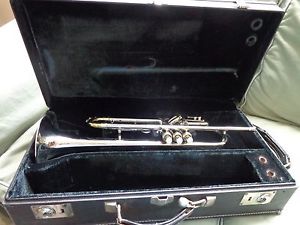
Comes in a Yamaha Case in very Good condition.Here is what the Conn Loyalist says about this horn.There has been some confusion over the fact that Connstellations from different years look a bit different. So I have decided to "split" the 28A Connstellation into a page for "Early Model" and "Late Model" as I have done with some of the other models. The Connstellation pictured here is the "Early Model". The difference with the early model is mainly in the design of the leadpipe and the engraving on the leadpipe. As for the engraving on the leadpipe, the "Early Model" 28A Connstellations have either "Connstellation" engraved on the leadpipe (without an "A" or "B" suffix) for the 1955 models or "Connstellation "A" for the 1956-1957 models. The reason for this is that in 1955 there was no 38B yet. The Connstellation trumpet was the 28B, which doesn't resemble the 28A. The 38B came along in 1956, which did resemble the 28A and hence the addition of the "A" or "B". All of this is in addition to the engraving on the bell. The late models only have "A" stamped on the leadpipe.The 28A Connstellation, the cornet version of the 38B Connstellation trumpet. It would be more accurate to say the 38B Connstellation trumpet is the trumpet version of this cornet, since the 28A was first produced in 1955 while the 38B didn't appear until 1956. For a longer discussion about the cornet-ness of the 28A and 38B, see . The 28A was produced through at least 1969, and was probably discontinued soon thereafter.Mouthpiece wise, the 6A and 10A Victor models and the 28A Connstellation were built right in the years when Conn appears to have transitioned from short shank to long shank. I know that prior to 1955 Conn cornets were short shank only. From 1958 on they were long shank only. The intervening years, 1955-1957, are a bit uncertain. The 10A will accept both long and short shank cornet mouthpieces. I have played my 1956 10A with both types of mouthpieces and find that the short shank mouthpiece has less resistance and seems to respond better. This suggests that perhaps it was built for the short shank mouthpiece more than the long shank. The fact that both the 1956 catalog and the 1956 accessories catalog appear to show short shank mouthpieces seems to support this. If you own a 1955-1957 28A Connstellation, 10A Victor or 6A Victor, you might want to try it with a short shank cornet mouthpiece. For more information, drop me an e-mail.The 28A Connstellation has been described as the "secret weapon" or "hidden gem" among the Connstellations. I know of several people who prefer it above the 38B Connstellation trumpet. For one, by using various different mouthpieces the sound can varied between bright trumpet and mellow cornet, much more so than on a trumpet. Also, if you buy a 28A you will almost certainly always have an Elkhart instrument, since the 28A was probably discontinued when Conn moved to Abilene (at least I have never seen a 28A that wasn't an Elkhart). Unfortunately, many people have a hangup about playing a cornet. As long as these people don't massacre a 28A by amputating the leadpipe and replacing it with one from a trumpet (almost invariably not a Conn) thereby turning it into a worthless hunk of metal, that will leave more 28A's for the rest of us at a lower price than a 38B would go for. I apologize for the strong language.There are two ways to tell the difference between the 28A Connstellation cornet and a 38B Connstellation trumpet. The first is subtle, but should be apparent in most pictures if you know what to look for (you might recognize this picture as being previously on the 38B trumpet page. I have now found it is in fact a long cornet, for the following reason). If you look along the leadpipe you will see the diameter of the leadpipe increase about halfway between the finger hook and the main tuning slide. It is where the main tuning slide inserts into the leadpipe. This is the long cornet configuration. On a trumpet the increase in diameter occurs immediately after the finger hook, and is therefor longer. See . This might also be a way to distinguish a "real" 38B from a 28A with a replacement leadpipe/mouthpiece receiver. The second way to tell a long cornet from a trumpet is the mouthpiece receiver; the 28A will only accept a (smaller) cornet mouthpiece. Usually there will be either a stamped on the mouthpiece receiver. The letter "A" indicates a cornet leadpipe, the "B" indicates a trumpet leadpipe. The internal bore and taper (conical-ness) of the 28A is quite different from the 38B, but this isn't obvious from the outside. Over the years the 28A has undergone the same variations as the 38B Connstellation trumpet; valve caps, third slide stop screw, engraving. See under for a more detailed explanation. For a discussion on the merits of long model cornets such as this one, see The 28A is nickel plated with brass trim, and has a 5 1/8" bell. It was produced from 1955 through at least 1966. It doesn't appear in an early 1970's catalog. My guess is it was discontinued around 1969.The issue of whether Connstellations have a Coprion bell has been discussed here in the past and different theories exist. In August/September 2009 I received information and then, by chance, strong evidence that has caused me to change my views on this again.A former Conn employee said, and this appears to be confirmed by the 1960's Conn Product Manual and other reports, that Electro-D is a similar process to Coprion using non-copper metals. The former Conn employee said that an Electro-D bell was a brass bell, electrolytically plated with copper, and
Description
| Brand: | C. G. Conn | Model: | Connstellation 28A Long Cornet |
| Skill Level: | Professional | Era: | 1955 |
Comes in a Yamaha Case in very Good condition.Here is what the Conn Loyalist says about this horn.
There has been some confusion over the fact that Connstellations from different years look a bit different. So I have decided to "split" the 28A Connstellation into a page for "Early Model" and "Late Model" as I have done with some of the other models. The Connstellation pictured here is the "Early Model". The difference with the early model is mainly in the design of the leadpipe and the engraving on the leadpipe. As for the engraving on the leadpipe, the "Early Model" 28A Connstellations have either "Connstellation" engraved on the leadpipe (without an "A" or "B" suffix) for the 1955 models or "Connstellation "A" for the 1956-1957 models. The reason for this is that in 1955 there was no 38B yet. The Connstellation trumpet was the 28B, which doesn't resemble the 28A. The 38B came along in 1956, which did resemble the 28A and hence the addition of the "A" or "B". All of this is in addition to the engraving on the bell. The late models only have "A" stamped on the leadpipe.The 28A Connstellation, the cornet version of the 38B Connstellation trumpet. It would be more accurate to say the 38B Connstellation trumpet is the trumpet version of this cornet, since the 28A was first produced in 1955 while the 38B didn't appear until 1956. For a longer discussion about the cornet-ness of the 28A and 38B, see . The 28A was produced through at least 1969, and was probably discontinued soon thereafter.Mouthpiece wise, the 6A and 10A Victor models and the 28A Connstellation were built right in the years when Conn appears to have transitioned from short shank to long shank. I know that prior to 1955 Conn cornets were short shank only. From 1958 on they were long shank only. The intervening years, 1955-1957, are a bit uncertain. The 10A will accept both long and short shank cornet mouthpieces. I have played my 1956 10A with both types of mouthpieces and find that the short shank mouthpiece has less resistance and seems to respond better. This suggests that perhaps it was built for the short shank mouthpiece more than the long shank. The fact that both the 1956 catalog and the 1956 accessories catalog appear to show short shank mouthpieces seems to support this. If you own a 1955-1957 28A Connstellation, 10A Victor or 6A Victor, you might want to try it with a short shank cornet mouthpiece. For more information, drop me an e-mail.The 28A Connstellation has been described as the "secret weapon" or "hidden gem" among the Connstellations. I know of several people who prefer it above the 38B Connstellation trumpet. For one, by using various different mouthpieces the sound can varied between bright trumpet and mellow cornet, much more so than on a trumpet. Also, if you buy a 28A you will almost certainly always have an Elkhart instrument, since the 28A was probably discontinued when Conn moved to Abilene (at least I have never seen a 28A that wasn't an Elkhart). Unfortunately, many people have a hangup about playing a cornet. As long as these people don't massacre a 28A by amputating the leadpipe and replacing it with one from a trumpet (almost invariably not a Conn) thereby turning it into a worthless hunk of metal, that will leave more 28A's for the rest of us at a lower price than a 38B would go for. I apologize for the strong language.There are two ways to tell the difference between the 28A Connstellation cornet and a 38B Connstellation trumpet. The first is subtle, but should be apparent in most pictures if you know what to look for (you might recognize this picture as being previously on the 38B trumpet page. I have now found it is in fact a long cornet, for the following reason). If you look along the leadpipe you will see the diameter of the leadpipe increase about halfway between the finger hook and the main tuning slide. It is where the main tuning slide inserts into the leadpipe. This is the long cornet configuration. On a trumpet the increase in diameter occurs immediately after the finger hook, and is therefor longer. See . This might also be a way to distinguish a "real" 38B from a 28A with a replacement leadpipe/mouthpiece receiver. The second way to tell a long cornet from a trumpet is the mouthpiece receiver; the 28A will only accept a (smaller) cornet mouthpiece. Usually there will be either a stamped on the mouthpiece receiver. The letter "A" indicates a cornet leadpipe, the "B" indicates a trumpet leadpipe. The internal bore and taper (conical-ness) of the 28A is quite different from the 38B, but this isn't obvious from the outside. Over the years the 28A has undergone the same variations as the 38B Connstellation trumpet; valve caps, third slide stop screw, engraving. See under for a more detailed explanation. For a discussion on the merits of long model cornets such as this one, see The 28A is nickel plated with brass trim, and has a 5 1/8" bell. It was produced from 1955 through at least 1966. It doesn't appear in an early 1970's catalog. My guess is it was discontinued around 1969.The issue of whether Connstellations have a Coprion bell has been discussed here in the past and different theories exist. In August/September 2009 I received information and then, by chance, strong evidence that has caused me to change my views on this again.A former Conn employee said, and this appears to be confirmed by the 1960's Conn Product Manual and other reports, that Electro-D is a similar process to Coprion using non-copper metals. The former Conn employee said that an Electro-D bell was a brass bell, electrolytically plated with copper, and