Back to the main page Back to category Roland GR300 Key
musical instrument details
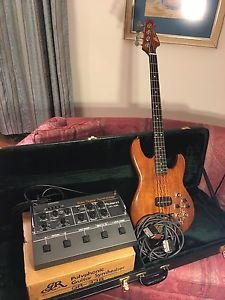
RARE Roland G-33 Bass GR-33b Bass Synthesizer GR-300 G-303 COMPLETE SETUP
Estimated price for orientation: 1 900 $
Category: Roland GR300 Key
Class:
Description Condition: Used: An item that has been used previously. The item may have some signs of cosmetic wear, but is fully operational and functions as intended. This item may be a floor model or store return that has been used. See the seller’s listing for full details and description of any imperfections. See all condition definitions- opens in a new window or tab ... Read moreabout the condition Brand: Roland Type: Synthesizer
For Sale: Roland G-33 + GR-33B Analog Bass Guitar Synthesizer CONDITION: -GR-33b (Formerly owned by Wayne Joness...original box included..with matching serial numbers) shows cosmetic signs of use...synth works flawlessly. -G-33 bass shows cosmetic signs of use. Currently setup by my luthier. Plays flawslessy. Non-original hard shell case included. -24 pin cable works flawlessly ...shows cosmetic signs of use ^^^*** PLEASE SEE PHOTOS FOR COSMETIC DESCRIPTION ////////FULL SETUP INCLUDES ROLAND 24 PIN CABLE////// RARE....this is synth bass players analog dream setup!!!!!!! Roland GR-33B Analog Bass Guitar Synthesizer Features and Specifications: 4-voice polyphony
2 oscillators per voice
VCOs (voltage controlled oscillator) are directly harmonically locked to each string, but can be tuned separately
VCF (voltage controlled filter, low pass), 2 modes, -12 dB or -24 dB per octave, with envelope modulation (attack and decay)
Low Frequency Oscillator with lag (delay) generator
Built-in foot switch controls the VCF or VCA modulation
Built-in foot switches control the VCO harmonize pitch (detuning of the VCO's)
Built-in foot switch selects envelope presets A or B
Pedal control input for the VCF
The GR-33B can output either the guitar, the synth, or a mix of the two
Synchronized, flashing LED status indicators
Dimensions: 15.75" (W) 11.125" (D) 4" (H)
Power Requirements: 20 watts
Response Time: 13.00 ms Introduction to the Roland GR-33B: The Roland GR-33B is the bass guitar version of the GR-300. Some changes were made to meet the specific needs of bass players. Also, there is no hex fuzz circuit.The GR-33B also has two selectable envelopes, and a choice of VCF and/or VCA modulation. While the GR-300 has a -24 dB per octave filter, and the GR-100 has a -12 dB per octave filter, the GR-33B actually has both, with a switch to select -12 dB or -24 dB operation. There is no pitch sweep like on the GR-300. The GR-33B has a very cool variable LFO delay. This delay follows the envelope generator. This means you can play a note and hear the LFO quickly or slowly swell in. Playing notes rapidly means that you will not hear the vibrato effect. It is very expressive, and makes sense for the bass player that may not want constant vibrato. If you check out the Frankenstein demo, you will hear vibrato swelling in on the main line. I did not use the touch pads to activate the vibrato each time I played the phrase, but instead set a short delay so the vibrato would swell in on the longer quarter notes in the melody. .
The GR-33B sounds very much like the GR-300. If you compare the block diagram for both synths, you will see that they are basically the same. Likewise, the synth response time for the GR-33B is very fast, like the GR-300. I did a few timing checks when recording demos for the GR-33B, and the delay was in the range of 2 - 4 milliseconds. This is the kind of speed that a digital synth could only dream of.I would like to mention that I really wish the GR-33B provided access to the square wave output. Like the GR-300, the main output is an unusual ramp waveform. When the duet mode is engaged, you can hear a square wave and the ramp wave. The problem is the aggressiveness of the ramp wave. It is much more like a brass wave, than the buttery smooth sound of a classic Minimoog bass patch. You can filter the ramp wave to eliminate the aggressiveness, but the waveform becomes very dark with few harmonics. You can hear this sound in the VCF and VCA modulation demos below. The Frankenstein demo also shows off the aggressive sound of the GR-33B.
Roland G-33 Bass Guitar Synthesizer Controller Features and Specifications: Body: Ash
Finish: Acrylic, "Robert" brown
Neck: Maple set-in
Fingerboard: Rosewood
Frets: 21
Bridge: Adjustable
Nut: Polycarbonate
Tuning machines: Gotoh
Pickups: One Roland PU-144S single-coil
Scale: 34"
Truss Rod: Single, Adjustable
Neck Width: 1 11/16"
Body Width: 13"
Body Depth: 1 3/4"
Overall Length: 45 1/2" Introduction to the Roland G-33: The was packaged with the G-33 or bass guitar controller. Like the and , the basic design of the bass guitar is the same for the G-33 and G-88. The G-33 and G-88 electronics package has master volume and two bands (high and low) of active equalization. When connected to a Roland guitar synthesizer, the active electronics are powered by the synth. When used alone, two nine-volt batteries supply power.The G-33 has a rosewood fingerboard and set-neck construction. And, like the G-303, the G-33 has nickel/aluminum alloy nichrome plated hardware. The guitar synthesizer brochure notes that the G-33 has a Roland PU-144S single-coil pickup.The G-33/G-88 bass guitar, like all the vintage Roland guitars, was built by the Fuji Roland corporation, a joint venture by Roland and the Fujigen Gakki. (now known as guitars) also made the Ibanez guitars. Yes, I do ship international. Please send location for price. Sold as is. Please ask any and all questions before bidding. I have 100% feedback and stand behind what I sell.
Description
| Condition: | Used: An item that has been used previously. The item may have some signs of cosmetic wear, but is fully operational and functions as intended. This item may be a floor model or store return that has been used. See the seller’s listing for full details and description of any imperfections. See all condition definitions- opens in a new window or tab ... Read moreabout the condition | Brand: | Roland |
| Type: | Synthesizer |
For Sale: Roland G-33 + GR-33B Analog Bass Guitar Synthesizer CONDITION: -GR-33b (Formerly owned by Wayne Joness...original box included..with matching serial numbers) shows cosmetic signs of use...synth works flawlessly. -G-33 bass shows cosmetic signs of use. Currently setup by my luthier. Plays flawslessy. Non-original hard shell case included. -24 pin cable works flawlessly ...shows cosmetic signs of use ^^^*** PLEASE SEE PHOTOS FOR COSMETIC DESCRIPTION ////////FULL SETUP INCLUDES ROLAND 24 PIN CABLE////// RARE....this is synth bass players analog dream setup!!!!!!! Roland GR-33B Analog Bass Guitar Synthesizer Features and Specifications: 4-voice polyphony
2 oscillators per voice
VCOs (voltage controlled oscillator) are directly harmonically locked to each string, but can be tuned separately
VCF (voltage controlled filter, low pass), 2 modes, -12 dB or -24 dB per octave, with envelope modulation (attack and decay)
Low Frequency Oscillator with lag (delay) generator
Built-in foot switch controls the VCF or VCA modulation
Built-in foot switches control the VCO harmonize pitch (detuning of the VCO's)
Built-in foot switch selects envelope presets A or B
Pedal control input for the VCF
The GR-33B can output either the guitar, the synth, or a mix of the two
Synchronized, flashing LED status indicators
Dimensions: 15.75" (W) 11.125" (D) 4" (H)
Power Requirements: 20 watts
Response Time: 13.00 ms Introduction to the Roland GR-33B: The Roland GR-33B is the bass guitar version of the GR-300. Some changes were made to meet the specific needs of bass players. Also, there is no hex fuzz circuit.The GR-33B also has two selectable envelopes, and a choice of VCF and/or VCA modulation. While the GR-300 has a -24 dB per octave filter, and the GR-100 has a -12 dB per octave filter, the GR-33B actually has both, with a switch to select -12 dB or -24 dB operation. There is no pitch sweep like on the GR-300. The GR-33B has a very cool variable LFO delay. This delay follows the envelope generator. This means you can play a note and hear the LFO quickly or slowly swell in. Playing notes rapidly means that you will not hear the vibrato effect. It is very expressive, and makes sense for the bass player that may not want constant vibrato. If you check out the Frankenstein demo, you will hear vibrato swelling in on the main line. I did not use the touch pads to activate the vibrato each time I played the phrase, but instead set a short delay so the vibrato would swell in on the longer quarter notes in the melody. .
The GR-33B sounds very much like the GR-300. If you compare the block diagram for both synths, you will see that they are basically the same. Likewise, the synth response time for the GR-33B is very fast, like the GR-300. I did a few timing checks when recording demos for the GR-33B, and the delay was in the range of 2 - 4 milliseconds. This is the kind of speed that a digital synth could only dream of.I would like to mention that I really wish the GR-33B provided access to the square wave output. Like the GR-300, the main output is an unusual ramp waveform. When the duet mode is engaged, you can hear a square wave and the ramp wave. The problem is the aggressiveness of the ramp wave. It is much more like a brass wave, than the buttery smooth sound of a classic Minimoog bass patch. You can filter the ramp wave to eliminate the aggressiveness, but the waveform becomes very dark with few harmonics. You can hear this sound in the VCF and VCA modulation demos below. The Frankenstein demo also shows off the aggressive sound of the GR-33B.
Roland G-33 Bass Guitar Synthesizer Controller Features and Specifications: Body: Ash
Finish: Acrylic, "Robert" brown
Neck: Maple set-in
Fingerboard: Rosewood
Frets: 21
Bridge: Adjustable
Nut: Polycarbonate
Tuning machines: Gotoh
Pickups: One Roland PU-144S single-coil
Scale: 34"
Truss Rod: Single, Adjustable
Neck Width: 1 11/16"
Body Width: 13"
Body Depth: 1 3/4"
Overall Length: 45 1/2" Introduction to the Roland G-33: The was packaged with the G-33 or bass guitar controller. Like the and , the basic design of the bass guitar is the same for the G-33 and G-88. The G-33 and G-88 electronics package has master volume and two bands (high and low) of active equalization. When connected to a Roland guitar synthesizer, the active electronics are powered by the synth. When used alone, two nine-volt batteries supply power.The G-33 has a rosewood fingerboard and set-neck construction. And, like the G-303, the G-33 has nickel/aluminum alloy nichrome plated hardware. The guitar synthesizer brochure notes that the G-33 has a Roland PU-144S single-coil pickup.The G-33/G-88 bass guitar, like all the vintage Roland guitars, was built by the Fuji Roland corporation, a joint venture by Roland and the Fujigen Gakki. (now known as guitars) also made the Ibanez guitars. Yes, I do ship international. Please send location for price. Sold as is. Please ask any and all questions before bidding. I have 100% feedback and stand behind what I sell.
2 oscillators per voice
VCOs (voltage controlled oscillator) are directly harmonically locked to each string, but can be tuned separately
VCF (voltage controlled filter, low pass), 2 modes, -12 dB or -24 dB per octave, with envelope modulation (attack and decay)
Low Frequency Oscillator with lag (delay) generator
Built-in foot switch controls the VCF or VCA modulation
Built-in foot switches control the VCO harmonize pitch (detuning of the VCO's)
Built-in foot switch selects envelope presets A or B
Pedal control input for the VCF
The GR-33B can output either the guitar, the synth, or a mix of the two
Synchronized, flashing LED status indicators
Dimensions: 15.75" (W) 11.125" (D) 4" (H)
Power Requirements: 20 watts
Response Time: 13.00 ms Introduction to the Roland GR-33B: The Roland GR-33B is the bass guitar version of the GR-300. Some changes were made to meet the specific needs of bass players. Also, there is no hex fuzz circuit.The GR-33B also has two selectable envelopes, and a choice of VCF and/or VCA modulation. While the GR-300 has a -24 dB per octave filter, and the GR-100 has a -12 dB per octave filter, the GR-33B actually has both, with a switch to select -12 dB or -24 dB operation. There is no pitch sweep like on the GR-300. The GR-33B has a very cool variable LFO delay. This delay follows the envelope generator. This means you can play a note and hear the LFO quickly or slowly swell in. Playing notes rapidly means that you will not hear the vibrato effect. It is very expressive, and makes sense for the bass player that may not want constant vibrato. If you check out the Frankenstein demo, you will hear vibrato swelling in on the main line. I did not use the touch pads to activate the vibrato each time I played the phrase, but instead set a short delay so the vibrato would swell in on the longer quarter notes in the melody. .
The GR-33B sounds very much like the GR-300. If you compare the block diagram for both synths, you will see that they are basically the same. Likewise, the synth response time for the GR-33B is very fast, like the GR-300. I did a few timing checks when recording demos for the GR-33B, and the delay was in the range of 2 - 4 milliseconds. This is the kind of speed that a digital synth could only dream of.I would like to mention that I really wish the GR-33B provided access to the square wave output. Like the GR-300, the main output is an unusual ramp waveform. When the duet mode is engaged, you can hear a square wave and the ramp wave. The problem is the aggressiveness of the ramp wave. It is much more like a brass wave, than the buttery smooth sound of a classic Minimoog bass patch. You can filter the ramp wave to eliminate the aggressiveness, but the waveform becomes very dark with few harmonics. You can hear this sound in the VCF and VCA modulation demos below. The Frankenstein demo also shows off the aggressive sound of the GR-33B.
Roland G-33 Bass Guitar Synthesizer Controller Features and Specifications: Body: Ash
Finish: Acrylic, "Robert" brown
Neck: Maple set-in
Fingerboard: Rosewood
Frets: 21
Bridge: Adjustable
Nut: Polycarbonate
Tuning machines: Gotoh
Pickups: One Roland PU-144S single-coil
Scale: 34"
Truss Rod: Single, Adjustable
Neck Width: 1 11/16"
Body Width: 13"
Body Depth: 1 3/4"
Overall Length: 45 1/2" Introduction to the Roland G-33: The was packaged with the G-33 or bass guitar controller. Like the and , the basic design of the bass guitar is the same for the G-33 and G-88. The G-33 and G-88 electronics package has master volume and two bands (high and low) of active equalization. When connected to a Roland guitar synthesizer, the active electronics are powered by the synth. When used alone, two nine-volt batteries supply power.The G-33 has a rosewood fingerboard and set-neck construction. And, like the G-303, the G-33 has nickel/aluminum alloy nichrome plated hardware. The guitar synthesizer brochure notes that the G-33 has a Roland PU-144S single-coil pickup.The G-33/G-88 bass guitar, like all the vintage Roland guitars, was built by the Fuji Roland corporation, a joint venture by Roland and the Fujigen Gakki. (now known as guitars) also made the Ibanez guitars. Yes, I do ship international. Please send location for price. Sold as is. Please ask any and all questions before bidding. I have 100% feedback and stand behind what I sell.