Back to the main page Back to category Preamps and Channel Strips
musical instrument details
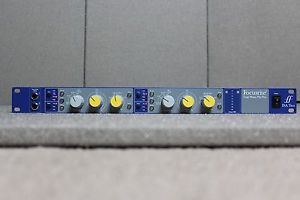
Focusrite ISA TWO, 2 Channel Microphone Preamp, Dual MONO MIC PRE, in box
Estimated price for orientation: 649 $
Category: Preamps and Channel Strips
Class:
Description Condition: Used: An item that has been used previously. The item may have some signs of cosmetic wear, but is fully operational and functions as intended. This item may be a floor model or store return that has been used. See the seller’s listing for full details and description of any imperfections. See all condition definitions- opens in a new window or tab ... Read moreabout the condition Brand: Focusrite Features: High Impedance Input, Modular, Phantom Power, Phase Reverse, Rack-Mountable, Solid State Type: Microphone Preamp MPN: ISA TWO Model: ISA TWO UPC: Does not apply Number of Channels: 2
This has been used less than ten times for recordings, but they've sounded great! I'm the original owner and have taken great care of it for the three months I've had it. I envisioned myself doing more M/S recordings but have been doing more post production than live recordings. It's really a beautiful piece and it should find its rightful home! Please see my pictures above for the condition. It will ship with its original power-cable and box. For your convenience, here's Focusrite's text describing this legendary piece of gear:ISA TwoYou may only need a couple of mic preamps – but they should be the best.The ISA Story goes back to 1985, when Sir George Martin commissioned legendary designer Rupert Neve to design new modules for the console at AIR Montserrat. They were so successful that more were commissioned for AIR London. These original modules form the basis of today’s Focusrite ISA range – delivering the legendary Focusrite sound to leading studios, artists, producers and engineers around the world. Literally hundreds of hits have been made with the Focusrite ISA Range – and continue to be made today.Focusrite’s ISA Two brings together a totally independent pair of legendary ISA microphone preamps from the original ISA 110 module, combining the best of traditional solid-state electronics with the original input transformer specified by Rupert Neve – the Lundahl LL1538. Two is a nice round number – ideal for recording, say, a vocal and an instrument, or a stereo piano. But though you may only need two mic pres, you owe it to your craft to choose the best. (And if you need more, we offer ISA 428 Mk II 4-channel and ISA 828 8-channel units too.)Variable input impedanceWe’ve made one little adjustment to the mic pre. The original ISA 110 had a single input impedance that was ideal for the mics of the time. We’ve added three more, allowing you to get the very best out of any microphone, vintage or modern. Give a vintage mic the input it expects to get a traditional, warm sound. Pair the ISA Two with modern microphones and get the most transparent sound imaginable. Or experiment and pull out the inner character of any microphone you care to try. Couple that with up to 80dB of gain and you can be ready for anything.Front panel instrument inputsIn addition to the mic pres, there are front panel instrument inputs for instant access, along with rear-panel line ins. There’s also a balanced insert point on the rear panel, actuated with a front-panel button so you can insert the EQ, dynamics or other processors you need. Add to that the user-calibrated 8-LED metering and variable cutoff high-pass filter and you know that with the ISA Two you’ll have everything you need to get the highest quality sound into your recordings.MultimediaKey FeaturesLundahl LL1538 mic input transformerRupert Neve originally chose the Lundahl LL1538 to be the input transformer on the ISA 110. To this day the Lundahl transformer remains the best microphone input transformer available, and is used in every ISA Series mic pre. Rupert Neve also perfected the Zobel network found in the ISA circuit; something which takes a lot of knowledge and a golden set of ears.Up to 80 dB of gainISA Two offers up to 80 dB of clean, distortion-free gain. The much heralded ISA topology also ensures low noise, even at the highest gain levels. The transformer alone supplies 20 dB of gain, while ISA's input stage offers up to 60 dB in addition, giving an astonishing 80 dB of maximum gain on the microphone input.Variable input impedanceFour choices of input impedance, including the original ISA 110 value, allow you to match the preamp to your microphone, even if it's a vintage type, giving you the best possible sound. The impedance is selected using a switch on the front panel, and the impedance choice is remembered even once the unit is switched off and back on.User-calibrated meteringEach channel has an eight-LED array to clearly display the level of your two signal. You can line up your analogue levels with your converters of DAW by using the calibration knob on the rear panel. You will be safe in the knowledge that you have avoided clipping on the way in.Front panel instrument and rear panel line inputsTwo 1/4in. jack sockets on the front panel of ISA Two give you instant access to a transparent DI input. TRS line inputs are available on the rear panel too, and you can step through them instantly to select the one you want.Variable cut-off high-pass filterBuilt in, and easily accessed with its own large knob an illuminated button, is an extremely smooth sounding 18dB/octave high-pass filter of the same design as the original ISA 110 module. This is ideal for cutting out rumble, thumps and other unwanted low-frequency sounds and with a range of 16 to 420 Hz, it's easy to lose what you don't want, and keep what you do.Rear panel balanced insertsEach channel of ISA Two has its own balanced insert point. With 1/4in. TRS send and receive connections, your choice of signal processor can be connected and switched in and out using the illuminated switch on the front panel.SpecificationsFront panel, per channel1/4" instrument inputVariable input impedance - Low, ISA 110, Medium, HighInput selection - Mic, Line, Instrument0 - 30 dB/30 - 60 dB gain switchPhantom power switchPhase invert switch0 - 60 dB gain in 10 dB steps0 - +20 dB continuously variable trimVariable high-pass filter with on/off switchInsert point on/off switchEight-LED user-calibrated level metersSingle power switchRear panel, per channelXLR-F mic inputs1/4" TRS line inputs1/4" TRS Sends1/4" TRS ReturnsXLR-M line outputSingle peak meter calibration dialSingle IEC power socketMaximum Input and Output LevelsMaximum Output Level+24 dBu with a THD+N < 0.01% at 1kHz measured with 150 Ω source impedance and 22Hz/22kHz band-pass filterMaximum Microphone Transformer Input Level+7 dBu with a THD+N < 0.7% at 1kHz measured at 0 dB of gain with 150 Ω source impedance and 22Hz/22kHz band-pass filterMic Input ResponseGain range0 dB to +60 dB in 10 dB steps, plus 0 dB to +20 dB continuously variable trimInput ImpedanceSwitched Impedance settingEquivalent Input Impedance at 1 kHzLow = 600 ΩISA 110 = 1.4 kΩMed = 2.4 kΩHigh = 6.8 kΩEIN (Equivalent Input Noise)Measured at 60 dB of gain with 150 Ω source impedance and 22 Hz-22 kHz band pass filter-127 dBNoiseNoise at output with unity gain (0 dB) and 22 Hz-22 kHz band pass filter-97 dBuSignal-to-Noise RatioMeasured with 150 Ω source impedance and 22 Hz-22 kHz band pass filter121 dB relative to max output +24 dBuTotal Harmonic Distortion + NoiseMeasured with a -20 dBu input signal at +30 dB of gain and with a 22 Hz-22 kHz band pass filter< 0.0007% at 1 kHzFrequency ResponseAt minimum gain (0 dB)-0.5 dB at 10 Hz,
-1 dB at 135 kHz, relative to 1 kHzAt +60 dB gain-6 dB at 10 Hz, -1 dB at 115 kHz, relative to 1 kHzCMRR (Common Mode Rejection Ratio)-94 dB for mic input at 60 Hz for max. output = +24 dBu-91 dB for mic input at 10 kHz for max. output = +24 dBuCrosstalk Channel to ChannelMic input, with I/P = 0 dBu, gain = 0 dB @ 1 kHz input to channel A, channel B output = -85 dBLine Input ResponseGain range-20 dB to +10 dB in 10 dB steps, plus 0 dB to +20 dB continuously variable trimInput Impedance10 kΩ from 10 Hz to 200 kHzNoiseNoise at main output with gain at unity (0 dB) measured with 50 Ω source impedance and a 22Hz - 22 kHz band pass filter-97 dBuSignal-to-Noise RatioMeasured with 50 Ω source impedance and a 22 Hz-22 kHz band pass filter121 dB relative to max output +24 dBuTotal Harmonic Distortion + NoiseMeasured with a 0 dBu input signal, +10 dB of gain and a 22 Hz-22 kHz band pass filter< 0.0002% at 1 kHzFrequency ResponseAt minimum gain (0 dB)-0.3 dB at 10 Hz, -1 dB at 80 kHz, relative to 1 kHzCrosstalk Channel to ChannelLine input, with I/P = 0 dBu, gain = 0dB @ 1 kHz input to channel AChannel B output
= -91 dBInstrument Input ResponseGain range+10 dB to +40 dB continuously variable trimInput Impedance2 MΩNoiseMeasured with 22 Hz-22 kHz band pass filterMinimum gain (+10 dB) = -95 dBuFrequency ResponseAt minimum gain (+10 dB)-0.1 dB at 10 Hz,
-1 dB at 115 kHz, relative to 1 kHzAt maximum gain (+40 dB)-2.5 dB at 10 Hz,
-1 dB at 110 kHz, relative to 1 kHzHigh-Pass FilterRoll-Off 18 dB per octave (3 pole filter)Frequency RangeContinuously variable from 16 Hz to 420 Hz (-3 dB)Weight and DimensionsW x D x H480 mm x 280 mm x 44 mmWeight3.7 kg
Description
| Condition: | Used: An item that has been used previously. The item may have some signs of cosmetic wear, but is fully operational and functions as intended. This item may be a floor model or store return that has been used. See the seller’s listing for full details and description of any imperfections. See all condition definitions- opens in a new window or tab ... Read moreabout the condition | Brand: | Focusrite |
| Features: | High Impedance Input, Modular, Phantom Power, Phase Reverse, Rack-Mountable, Solid State | Type: | Microphone Preamp |
| MPN: | ISA TWO | Model: | ISA TWO |
| UPC: | Does not apply | Number of Channels: | 2 |
This has been used less than ten times for recordings, but they've sounded great! I'm the original owner and have taken great care of it for the three months I've had it. I envisioned myself doing more M/S recordings but have been doing more post production than live recordings. It's really a beautiful piece and it should find its rightful home! Please see my pictures above for the condition. It will ship with its original power-cable and box. For your convenience, here's Focusrite's text describing this legendary piece of gear:ISA TwoYou may only need a couple of mic preamps – but they should be the best.The ISA Story goes back to 1985, when Sir George Martin commissioned legendary designer Rupert Neve to design new modules for the console at AIR Montserrat. They were so successful that more were commissioned for AIR London. These original modules form the basis of today’s Focusrite ISA range – delivering the legendary Focusrite sound to leading studios, artists, producers and engineers around the world. Literally hundreds of hits have been made with the Focusrite ISA Range – and continue to be made today.Focusrite’s ISA Two brings together a totally independent pair of legendary ISA microphone preamps from the original ISA 110 module, combining the best of traditional solid-state electronics with the original input transformer specified by Rupert Neve – the Lundahl LL1538. Two is a nice round number – ideal for recording, say, a vocal and an instrument, or a stereo piano. But though you may only need two mic pres, you owe it to your craft to choose the best. (And if you need more, we offer ISA 428 Mk II 4-channel and ISA 828 8-channel units too.)Variable input impedanceWe’ve made one little adjustment to the mic pre. The original ISA 110 had a single input impedance that was ideal for the mics of the time. We’ve added three more, allowing you to get the very best out of any microphone, vintage or modern. Give a vintage mic the input it expects to get a traditional, warm sound. Pair the ISA Two with modern microphones and get the most transparent sound imaginable. Or experiment and pull out the inner character of any microphone you care to try. Couple that with up to 80dB of gain and you can be ready for anything.Front panel instrument inputsIn addition to the mic pres, there are front panel instrument inputs for instant access, along with rear-panel line ins. There’s also a balanced insert point on the rear panel, actuated with a front-panel button so you can insert the EQ, dynamics or other processors you need. Add to that the user-calibrated 8-LED metering and variable cutoff high-pass filter and you know that with the ISA Two you’ll have everything you need to get the highest quality sound into your recordings.MultimediaKey Features
Lundahl LL1538 mic input transformerRupert Neve originally chose the Lundahl LL1538 to be the input transformer on the ISA 110. To this day the Lundahl transformer remains the best microphone input transformer available, and is used in every ISA Series mic pre. Rupert Neve also perfected the Zobel network found in the ISA circuit; something which takes a lot of knowledge and a golden set of ears.Up to 80 dB of gainISA Two offers up to 80 dB of clean, distortion-free gain. The much heralded ISA topology also ensures low noise, even at the highest gain levels. The transformer alone supplies 20 dB of gain, while ISA's input stage offers up to 60 dB in addition, giving an astonishing 80 dB of maximum gain on the microphone input.Variable input impedanceFour choices of input impedance, including the original ISA 110 value, allow you to match the preamp to your microphone, even if it's a vintage type, giving you the best possible sound. The impedance is selected using a switch on the front panel, and the impedance choice is remembered even once the unit is switched off and back on.User-calibrated meteringEach channel has an eight-LED array to clearly display the level of your two signal. You can line up your analogue levels with your converters of DAW by using the calibration knob on the rear panel. You will be safe in the knowledge that you have avoided clipping on the way in.Front panel instrument and rear panel line inputsTwo 1/4in. jack sockets on the front panel of ISA Two give you instant access to a transparent DI input. TRS line inputs are available on the rear panel too, and you can step through them instantly to select the one you want.Variable cut-off high-pass filterBuilt in, and easily accessed with its own large knob an illuminated button, is an extremely smooth sounding 18dB/octave high-pass filter of the same design as the original ISA 110 module. This is ideal for cutting out rumble, thumps and other unwanted low-frequency sounds and with a range of 16 to 420 Hz, it's easy to lose what you don't want, and keep what you do.Rear panel balanced insertsEach channel of ISA Two has its own balanced insert point. With 1/4in. TRS send and receive connections, your choice of signal processor can be connected and switched in and out using the illuminated switch on the front panel.
SpecificationsFront panel, per channel1/4" instrument inputVariable input impedance - Low, ISA 110, Medium, HighInput selection - Mic, Line, Instrument0 - 30 dB/30 - 60 dB gain switchPhantom power switchPhase invert switch0 - 60 dB gain in 10 dB steps0 - +20 dB continuously variable trimVariable high-pass filter with on/off switchInsert point on/off switchEight-LED user-calibrated level metersSingle power switchRear panel, per channelXLR-F mic inputs1/4" TRS line inputs1/4" TRS Sends1/4" TRS ReturnsXLR-M line outputSingle peak meter calibration dialSingle IEC power socketMaximum Input and Output Levels
Maximum Output Level+24 dBu with a THD+N < 0.01% at 1kHz measured with 150 Ω source impedance and 22Hz/22kHz band-pass filterMaximum Microphone Transformer Input Level+7 dBu with a THD+N < 0.7% at 1kHz measured at 0 dB of gain with 150 Ω source impedance and 22Hz/22kHz band-pass filter
Mic Input ResponseGain range0 dB to +60 dB in 10 dB steps, plus 0 dB to +20 dB continuously variable trimInput ImpedanceSwitched Impedance settingEquivalent Input Impedance at 1 kHzLow = 600 ΩISA 110 = 1.4 kΩMed = 2.4 kΩHigh = 6.8 kΩEIN (Equivalent Input Noise)Measured at 60 dB of gain with 150 Ω source impedance and 22 Hz-22 kHz band pass filter-127 dBNoiseNoise at output with unity gain (0 dB) and 22 Hz-22 kHz band pass filter-97 dBuSignal-to-Noise RatioMeasured with 150 Ω source impedance and 22 Hz-22 kHz band pass filter121 dB relative to max output +24 dBuTotal Harmonic Distortion + NoiseMeasured with a -20 dBu input signal at +30 dB of gain and with a 22 Hz-22 kHz band pass filter< 0.0007% at 1 kHzFrequency ResponseAt minimum gain (0 dB)-0.5 dB at 10 Hz,
-1 dB at 135 kHz, relative to 1 kHzAt +60 dB gain-6 dB at 10 Hz, -1 dB at 115 kHz, relative to 1 kHzCMRR (Common Mode Rejection Ratio)-94 dB for mic input at 60 Hz for max. output = +24 dBu-91 dB for mic input at 10 kHz for max. output = +24 dBuCrosstalk Channel to ChannelMic input, with I/P = 0 dBu, gain = 0 dB @ 1 kHz input to channel A, channel B output = -85 dB
Line Input ResponseGain range-20 dB to +10 dB in 10 dB steps, plus 0 dB to +20 dB continuously variable trimInput Impedance10 kΩ from 10 Hz to 200 kHz
NoiseNoise at main output with gain at unity (0 dB) measured with 50 Ω source impedance and a 22Hz - 22 kHz band pass filter-97 dBuSignal-to-Noise RatioMeasured with 50 Ω source impedance and a 22 Hz-22 kHz band pass filter121 dB relative to max output +24 dBuTotal Harmonic Distortion + NoiseMeasured with a 0 dBu input signal, +10 dB of gain and a 22 Hz-22 kHz band pass filter< 0.0002% at 1 kHzFrequency ResponseAt minimum gain (0 dB)-0.3 dB at 10 Hz, -1 dB at 80 kHz, relative to 1 kHzCrosstalk Channel to ChannelLine input, with I/P = 0 dBu, gain = 0dB @ 1 kHz input to channel AChannel B output
= -91 dB
Instrument Input ResponseGain range+10 dB to +40 dB continuously variable trimInput Impedance2 MΩNoiseMeasured with 22 Hz-22 kHz band pass filterMinimum gain (+10 dB) = -95 dBu
Frequency ResponseAt minimum gain (+10 dB)-0.1 dB at 10 Hz,
-1 dB at 115 kHz, relative to 1 kHzAt maximum gain (+40 dB)-2.5 dB at 10 Hz,
-1 dB at 110 kHz, relative to 1 kHz
High-Pass FilterRoll-Off 18 dB per octave (3 pole filter)
Frequency RangeContinuously variable from 16 Hz to 420 Hz (-3 dB)
Weight and DimensionsW x D x H480 mm x 280 mm x 44 mmWeight3.7 kg