Back to the main page Back to category Synthesizers
musical instrument details
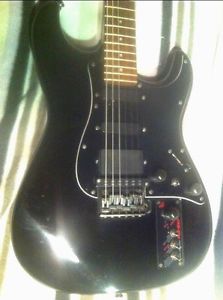
Casio Ibanez MG 510 El.Guitar+MIDI Guitar Legende black 3 PU Vibrato 2in1 Guitar
Estimated price for orientation: 548 $
Category: Synthesizers
Class:
Description Condition: Used: An item that has been used previously. The item may have some signs of cosmetic wear, but is fully operational and functions as intended. This item may be a floor model or store return that has been used. See the seller’s listing for full details and description of any imperfections. See all condition definitions- opens in a new window or tab ... Read moreabout the condition
DEMOS HIER https://www.youtube.com/results?search_query=roland+mg+510MANUAL HIER https://boocirtimeh.files.wordpress.com/2015/11/casio-mg-510-manual.pdf
SCHEMATICS HIER https://elektrotanya.com/casio_mg-500_mg-510_sm_and_parts_list.pdf/download.htmlCasio hat dafür eine Ibanez-Stratocaster Gitarre umgebaut mit der Gitarre jeden MIDI-Klangerzeuger bzw. Keyboard Synthesizer Drum Plugins spielen oder gleichzeitig mit normaler Verstärkung. Vibrato und Bending werden über MIDI in Echtzeit übertragen. Chromatic-Mode möglich (Chromatic/normal/program change)Octave up/down/normal.
Guitar sound/MIDI sound/beide. Gitarre kann ganz normal (ohne MIDI und Batterien) benutzt werden. Auch normal super Sound und Sustain. für MIDI und Tuner sind nur nornmale Batterien erforderlich gut erhalten und Gebrauchsspuren Korpus aus Linde, geringes Gewicht Ahornhals mit Palisander-Griffbrett (22 Bünde), gute Saitenlage, leicht zu spielen 2 Single Coil-Pickups, 1 Humbucker- Pickup, 1 MIDI-Pickup DATA ohne GEWÄHR
Here is an interesting guitar from my collection. Casio made these guitars to try and capture some of the sales of electric guitars, coupled with MIDI, or Musical Instrument Digital Interface functionality built-in.The MIDI standard was created so that MIDI Keyboards, and later MIDI-modules could be connected toghther, and controlled from a single master keyboard or 'controller'. The controller sent out commands on up to 16-channels, (later 32+ channels and more), in order to create a massive, harmonically rich synthesizer sound that artists like Keith Emerson and Rick Wakeman were producing in the studio and at live concerts and recordings.MIDi is still in use today, and the feature set has grown to include lighting control for live shows and stage and screen-based theatre productions. The interface is somewhat slow based on today's standards, however the bit rate is sufficient to control some large interconnected instrument configurations and other devices like fire, fog and smoke machines. The Casio MIDI Guitar instrument appears to be based on the Fender Stratocaster electric guitar, the body shape, and the body-contour on the top-rear are styled after the Stratocaster. The headstock where the string tuning keys are located has a unique design, no doubt to prevent Fender's attorney's from calling and protesting. The standard electric guitar pickups are as follows: humbucker-style at the bridge, single-coil in the middle, and single-coil at the neck position. The pickup selector switch is a 5-way, meaning that positions 1, 3 and 5 select individual pickups, and positions 2 and 4 select a tapped-pickup that gives a phase-reversed sound much revered in modern music by such notable guitar legends as Eric Clapton, Jeff Beck, Jimi Hendrix, and Stevie Ray Vaughn.Rounding out the regular electric guitar controls are a master volume and a tone control and another tiny switch mounted between the volume and tone controls for the electric guitar. This is a coil tapping switch for the humbucking-style pickup, providing the thin, chunky sound of a single-coil, phase reversed from the non-coil-tapped pickup sound.There is a whammy-bar bridge attached, and tuning seems pretty good after performing a 'dive-bomb' lowering of the strings tension by pressing the whammy bar towards the pickups.The similarities to a standard electric guitar end here, and the interesting MIDI implementation will now be discussed. The MIDI interface consists of a special hexaphonic-pickup, mounted between the bridge and the humbucking pickup.The hexaphonic pickup, along with some sophisticated electronic circuitry, converts the vibrating guitar strings, into 'MIDI-note-values'. These MIDI data streams leave the guitar on a MIDI-cable, a five-pin 'DIN-style" circular shell male connector, and are received by the desired instrument connected to the other end of the MIDI cable. There are two pole-pieces embedded in the hexaphonic pickup for each string, in a horizontal-pairs configuration. An additional MIDI control panel features a MIDI volume control, and three-each, three-position, bat-handle switches. The switches perform the following tasks. The switch closest to the MIDI volume control, selects electric guitar alone, guitar+MIDI, or MIDI-alone.You connect an external keyboard, a drum machine ora 'MIDI-instrument-module' to the Casio guitar through a MIDI OUT port on the rear bottom of the guitar body. On this panel also resides an on-off switch, and a dc-in connector for a 'wall-wart' AC to 9-volts DC inverter. Other power options include installing 6-AA 1.5-volt cells inside the guitar body. The middle switch performs an 'octave-switching' function. leaving the switch in the center position, means you are not shifting the range of the triggered instrument up or down in octaves. Moving the switch in one direction, causes your MIDI instrument to be transposed up one octave (12 notes) from standard. Moving the switch in the opposite direction causes the triggered MIDI instrument to be lowered by one octave.
Description
| Condition: | Used: An item that has been used previously. The item may have some signs of cosmetic wear, but is fully operational and functions as intended. This item may be a floor model or store return that has been used. See the seller’s listing for full details and description of any imperfections. See all condition definitions- opens in a new window or tab ... Read moreabout the condition |
DEMOS HIER https://www.youtube.com/results?search_query=roland+mg+510MANUAL HIER https://boocirtimeh.files.wordpress.com/2015/11/casio-mg-510-manual.pdf
SCHEMATICS HIER https://elektrotanya.com/casio_mg-500_mg-510_sm_and_parts_list.pdf/download.htmlCasio hat dafür eine Ibanez-Stratocaster Gitarre umgebaut mit der Gitarre jeden MIDI-Klangerzeuger bzw. Keyboard Synthesizer Drum Plugins spielen oder gleichzeitig mit normaler Verstärkung. Vibrato und Bending werden über MIDI in Echtzeit übertragen. Chromatic-Mode möglich (Chromatic/normal/program change)Octave up/down/normal.
Guitar sound/MIDI sound/beide. Gitarre kann ganz normal (ohne MIDI und Batterien) benutzt werden. Auch normal super Sound und Sustain. für MIDI und Tuner sind nur nornmale Batterien erforderlich gut erhalten und Gebrauchsspuren Korpus aus Linde, geringes Gewicht Ahornhals mit Palisander-Griffbrett (22 Bünde), gute Saitenlage, leicht zu spielen 2 Single Coil-Pickups, 1 Humbucker- Pickup, 1 MIDI-Pickup DATA ohne GEWÄHR
Here is an interesting guitar from my collection. Casio made these guitars to try and capture some of the sales of electric guitars, coupled with MIDI, or Musical Instrument Digital Interface functionality built-in.The MIDI standard was created so that MIDI Keyboards, and later MIDI-modules could be connected toghther, and controlled from a single master keyboard or 'controller'. The controller sent out commands on up to 16-channels, (later 32+ channels and more), in order to create a massive, harmonically rich synthesizer sound that artists like Keith Emerson and Rick Wakeman were producing in the studio and at live concerts and recordings.MIDi is still in use today, and the feature set has grown to include lighting control for live shows and stage and screen-based theatre productions. The interface is somewhat slow based on today's standards, however the bit rate is sufficient to control some large interconnected instrument configurations and other devices like fire, fog and smoke machines. The Casio MIDI Guitar instrument appears to be based on the Fender Stratocaster electric guitar, the body shape, and the body-contour on the top-rear are styled after the Stratocaster. The headstock where the string tuning keys are located has a unique design, no doubt to prevent Fender's attorney's from calling and protesting. The standard electric guitar pickups are as follows: humbucker-style at the bridge, single-coil in the middle, and single-coil at the neck position. The pickup selector switch is a 5-way, meaning that positions 1, 3 and 5 select individual pickups, and positions 2 and 4 select a tapped-pickup that gives a phase-reversed sound much revered in modern music by such notable guitar legends as Eric Clapton, Jeff Beck, Jimi Hendrix, and Stevie Ray Vaughn.Rounding out the regular electric guitar controls are a master volume and a tone control and another tiny switch mounted between the volume and tone controls for the electric guitar. This is a coil tapping switch for the humbucking-style pickup, providing the thin, chunky sound of a single-coil, phase reversed from the non-coil-tapped pickup sound.There is a whammy-bar bridge attached, and tuning seems pretty good after performing a 'dive-bomb' lowering of the strings tension by pressing the whammy bar towards the pickups.The similarities to a standard electric guitar end here, and the interesting MIDI implementation will now be discussed. The MIDI interface consists of a special hexaphonic-pickup, mounted between the bridge and the humbucking pickup.The hexaphonic pickup, along with some sophisticated electronic circuitry, converts the vibrating guitar strings, into 'MIDI-note-values'. These MIDI data streams leave the guitar on a MIDI-cable, a five-pin 'DIN-style" circular shell male connector, and are received by the desired instrument connected to the other end of the MIDI cable. There are two pole-pieces embedded in the hexaphonic pickup for each string, in a horizontal-pairs configuration. An additional MIDI control panel features a MIDI volume control, and three-each, three-position, bat-handle switches. The switches perform the following tasks. The switch closest to the MIDI volume control, selects electric guitar alone, guitar+MIDI, or MIDI-alone.You connect an external keyboard, a drum machine ora 'MIDI-instrument-module' to the Casio guitar through a MIDI OUT port on the rear bottom of the guitar body. On this panel also resides an on-off switch, and a dc-in connector for a 'wall-wart' AC to 9-volts DC inverter. Other power options include installing 6-AA 1.5-volt cells inside the guitar body. The middle switch performs an 'octave-switching' function. leaving the switch in the center position, means you are not shifting the range of the triggered instrument up or down in octaves. Moving the switch in one direction, causes your MIDI instrument to be transposed up one octave (12 notes) from standard. Moving the switch in the opposite direction causes the triggered MIDI instrument to be lowered by one octave.
SCHEMATICS HIER https://elektrotanya.com/casio_mg-500_mg-510_sm_and_parts_list.pdf/download.htmlCasio hat dafür eine Ibanez-Stratocaster Gitarre umgebaut mit der Gitarre jeden MIDI-Klangerzeuger bzw. Keyboard Synthesizer Drum Plugins spielen oder gleichzeitig mit normaler Verstärkung. Vibrato und Bending werden über MIDI in Echtzeit übertragen. Chromatic-Mode möglich (Chromatic/normal/program change)Octave up/down/normal.
Guitar sound/MIDI sound/beide. Gitarre kann ganz normal (ohne MIDI und Batterien) benutzt werden. Auch normal super Sound und Sustain. für MIDI und Tuner sind nur nornmale Batterien erforderlich gut erhalten und Gebrauchsspuren Korpus aus Linde, geringes Gewicht Ahornhals mit Palisander-Griffbrett (22 Bünde), gute Saitenlage, leicht zu spielen 2 Single Coil-Pickups, 1 Humbucker- Pickup, 1 MIDI-Pickup DATA ohne GEWÄHR
Here is an interesting guitar from my collection. Casio made these guitars to try and capture some of the sales of electric guitars, coupled with MIDI, or Musical Instrument Digital Interface functionality built-in.The MIDI standard was created so that MIDI Keyboards, and later MIDI-modules could be connected toghther, and controlled from a single master keyboard or 'controller'. The controller sent out commands on up to 16-channels, (later 32+ channels and more), in order to create a massive, harmonically rich synthesizer sound that artists like Keith Emerson and Rick Wakeman were producing in the studio and at live concerts and recordings.MIDi is still in use today, and the feature set has grown to include lighting control for live shows and stage and screen-based theatre productions. The interface is somewhat slow based on today's standards, however the bit rate is sufficient to control some large interconnected instrument configurations and other devices like fire, fog and smoke machines. The Casio MIDI Guitar instrument appears to be based on the Fender Stratocaster electric guitar, the body shape, and the body-contour on the top-rear are styled after the Stratocaster. The headstock where the string tuning keys are located has a unique design, no doubt to prevent Fender's attorney's from calling and protesting. The standard electric guitar pickups are as follows: humbucker-style at the bridge, single-coil in the middle, and single-coil at the neck position. The pickup selector switch is a 5-way, meaning that positions 1, 3 and 5 select individual pickups, and positions 2 and 4 select a tapped-pickup that gives a phase-reversed sound much revered in modern music by such notable guitar legends as Eric Clapton, Jeff Beck, Jimi Hendrix, and Stevie Ray Vaughn.Rounding out the regular electric guitar controls are a master volume and a tone control and another tiny switch mounted between the volume and tone controls for the electric guitar. This is a coil tapping switch for the humbucking-style pickup, providing the thin, chunky sound of a single-coil, phase reversed from the non-coil-tapped pickup sound.There is a whammy-bar bridge attached, and tuning seems pretty good after performing a 'dive-bomb' lowering of the strings tension by pressing the whammy bar towards the pickups.The similarities to a standard electric guitar end here, and the interesting MIDI implementation will now be discussed. The MIDI interface consists of a special hexaphonic-pickup, mounted between the bridge and the humbucking pickup.The hexaphonic pickup, along with some sophisticated electronic circuitry, converts the vibrating guitar strings, into 'MIDI-note-values'. These MIDI data streams leave the guitar on a MIDI-cable, a five-pin 'DIN-style" circular shell male connector, and are received by the desired instrument connected to the other end of the MIDI cable. There are two pole-pieces embedded in the hexaphonic pickup for each string, in a horizontal-pairs configuration. An additional MIDI control panel features a MIDI volume control, and three-each, three-position, bat-handle switches. The switches perform the following tasks. The switch closest to the MIDI volume control, selects electric guitar alone, guitar+MIDI, or MIDI-alone.You connect an external keyboard, a drum machine ora 'MIDI-instrument-module' to the Casio guitar through a MIDI OUT port on the rear bottom of the guitar body. On this panel also resides an on-off switch, and a dc-in connector for a 'wall-wart' AC to 9-volts DC inverter. Other power options include installing 6-AA 1.5-volt cells inside the guitar body. The middle switch performs an 'octave-switching' function. leaving the switch in the center position, means you are not shifting the range of the triggered instrument up or down in octaves. Moving the switch in one direction, causes your MIDI instrument to be transposed up one octave (12 notes) from standard. Moving the switch in the opposite direction causes the triggered MIDI instrument to be lowered by one octave.