Back to the main page Back to category Violins
musical instrument details
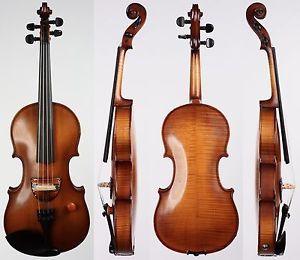
1936 National Valco Supro Vio-Lectric Electric Violin, Stuff Smith, w/Case RARE!
Estimated price for orientation: 3 800 $
Category: Violins
Class:
Description Type: Electric Brand: National Exact Year: 1936 Model: Vio-Lectric Size: 4/4 Country/Region of Manufacture: United States
Now this is something you don’t see every day. Up for sale is my very clean and very rare National Vio-Lectric electric violin, most likely built in late 1936. (The builders kept rather loose records at the time.) The serial number is A5610.This is one of the earliest commercially-produced electric violins. There is some evidence that this might have been the one owned and played by the famous jazz violinist Stuff Smith (1909-1967), but it is not conclusive. Every photo of every Vio-Lectric that I have ever seen, whether in ads, promotions, or photos of them being played, they all had a black or dark brown Bakelite volume knob. Every one, that is, except for the one owned and played by Stuff Smith. The photos of his personal instrument always show a much lighter-colored Bakelite knob. Though the photos are all black & white, they are consistent with a medium-light amber-colored knob, exactly like the one on this particular instrument. There were a lot of different finishes used on the violins themselves, and on the main body of the pickup, which shows above the top of the violin. Many were painted black, and some even had a black crinkle finish. Stuff’s instrument was like this one, with a sunburst finish on the casting, and a medium natural finish on the top of the instrument itself. So, if it is not Smith’s, it is at least from the same batch, it would seem.Even if this wasn’t Stuff’s, it is just like his was, and is a rare and fantastic old instrument. It is also the only one I am aware of that is in perfect working order. The patent number stamped on the pickup (1962919) is for a different pickup design than the one actually used on the Vio-Lectric. The pickup that is in the instrument is covered by a patent issued in 1939 under the number 2171430. The best reason that I can think of, for their putting an older patent number on the pickup, is that they wanted to ship the product before they were issued the patent, and hoped that showing a patent number would make people think that the pickup in the instrument was protected. To see the patent papers for this pickup design, click the following link: The design is unique, in that the pickup is magnetic, with wire coils, much as a standard electric guitar pickup would have. The difference is that the coils detect the movement of the bridge, which sits on a piece of steel, topped with a curved bit of wood. The piece of steel, in turn, sits on two rubber pads, one under each end, which allow the steel to move a bit as the strings vibrate. This is a much different sound than one would get from a magnetic pickup sensing the strings directly, and dramatically warmer and fuller-sounding than a Piezo pickup would give. The main reason that I believe it was not developed further and not still in common use today, is that it is heavy, and requires a dedicated instrument, so it cannot be easily retrofitted to an existing violin.The entire pickup assembly has been refurbished, including having the magnet re-charged by Jason Lollar, and having been fitted with new rubber pads. The original pads had hardened to the point of being like stone, so there was basically no movement of the bridge, and no output to speak of.I did a lot of research into how the magnet wanted to be charged, how the gaps needed to be set, and how much “give” the pads that float the bridge bar need to have. (If you have a Vio-Lectric, and would like to have its electronics restored, I have the materials and the experience to tackle the job. Please just get in touch with me, and I’d be glad to help you, either by doing the work, or by sharing my knowledge and experience.)The violin itself has been fully and professionally repaired and set-up by Duane Lasley at Lasley Violins in Seattle. He glued and cleated the three top cracks, which all National Vio-Lectrics have. The cracks are caused by the three screws which attach the pickup assembly to the top. Further, the fingerboard has been leveled to remove the deep wear grooves it had developed. The pegs have been re-fit, and now work smoothly. A new Ebony saddle has been fit, as the original had worn all the way though. Also, a new tailpiece (with fine-tuners for all strings) was fit, along with a new bridge and chinrest. It is now in perfect playing condition, and ready for another 78 years of play.As for the electronics, the original volume control has been cleaned and lubricated, and the old screw-on jack has been replaced with a modern Switchcraft # 11 open-frame ¼” phone jack, to accommodate standard guitar cables. (Fortunately, the modern jack fit in the exact same 3/8” diameter hole as the original one.) All of the electronics operate exactly as they should. The volume pot has been cleaned and lubed with DeoxIT D5, and functions perfectly, with no scratching or drop-outs.All the (I assume) original parts that were replaced, have been kept, and are in the pocket of the included original hard case. The case itself is only in acceptable condition. It is fine for shipping the instrument, but I would buy a new, padded hard case for it, if I were to take it out for gigs.TERMS, PLEASE READ CAREFULLY: Buyer pays selling price plus shipping and insurance. I typically ship with USPS or FedEx, though other arrangements can be made at the buyer's request. No fee is charged for packing or handling. I will gladly ship anywhere in the world, but beware, international shipping charges can be steep, and the buyer is responsible for all duties, taxes, VAT, brokerage and storage fees on their end. Please contact me with any questions.
Description
| Type: | Electric | Brand: | National |
| Exact Year: | 1936 | Model: | Vio-Lectric |
| Size: | 4/4 | Country/Region of Manufacture: | United States |
Now this is something you don’t see every day. Up for sale is my very clean and very rare National Vio-Lectric electric violin, most likely built in late 1936. (The builders kept rather loose records at the time.) The serial number is A5610.This is one of the earliest commercially-produced electric violins. There is some evidence that this might have been the one owned and played by the famous jazz violinist Stuff Smith (1909-1967), but it is not conclusive. Every photo of every Vio-Lectric that I have ever seen, whether in ads, promotions, or photos of them being played, they all had a black or dark brown Bakelite volume knob. Every one, that is, except for the one owned and played by Stuff Smith. The photos of his personal instrument always show a much lighter-colored Bakelite knob. Though the photos are all black & white, they are consistent with a medium-light amber-colored knob, exactly like the one on this particular instrument. There were a lot of different finishes used on the violins themselves, and on the main body of the pickup, which shows above the top of the violin. Many were painted black, and some even had a black crinkle finish. Stuff’s instrument was like this one, with a sunburst finish on the casting, and a medium natural finish on the top of the instrument itself. So, if it is not Smith’s, it is at least from the same batch, it would seem.Even if this wasn’t Stuff’s, it is just like his was, and is a rare and fantastic old instrument. It is also the only one I am aware of that is in perfect working order. The patent number stamped on the pickup (1962919) is for a different pickup design than the one actually used on the Vio-Lectric. The pickup that is in the instrument is covered by a patent issued in 1939 under the number 2171430. The best reason that I can think of, for their putting an older patent number on the pickup, is that they wanted to ship the product before they were issued the patent, and hoped that showing a patent number would make people think that the pickup in the instrument was protected. To see the patent papers for this pickup design, click the following link: The design is unique, in that the pickup is magnetic, with wire coils, much as a standard electric guitar pickup would have. The difference is that the coils detect the movement of the bridge, which sits on a piece of steel, topped with a curved bit of wood. The piece of steel, in turn, sits on two rubber pads, one under each end, which allow the steel to move a bit as the strings vibrate. This is a much different sound than one would get from a magnetic pickup sensing the strings directly, and dramatically warmer and fuller-sounding than a Piezo pickup would give. The main reason that I believe it was not developed further and not still in common use today, is that it is heavy, and requires a dedicated instrument, so it cannot be easily retrofitted to an existing violin.The entire pickup assembly has been refurbished, including having the magnet re-charged by Jason Lollar, and having been fitted with new rubber pads. The original pads had hardened to the point of being like stone, so there was basically no movement of the bridge, and no output to speak of.I did a lot of research into how the magnet wanted to be charged, how the gaps needed to be set, and how much “give” the pads that float the bridge bar need to have. (If you have a Vio-Lectric, and would like to have its electronics restored, I have the materials and the experience to tackle the job. Please just get in touch with me, and I’d be glad to help you, either by doing the work, or by sharing my knowledge and experience.)The violin itself has been fully and professionally repaired and set-up by Duane Lasley at Lasley Violins in Seattle. He glued and cleated the three top cracks, which all National Vio-Lectrics have. The cracks are caused by the three screws which attach the pickup assembly to the top. Further, the fingerboard has been leveled to remove the deep wear grooves it had developed. The pegs have been re-fit, and now work smoothly. A new Ebony saddle has been fit, as the original had worn all the way though. Also, a new tailpiece (with fine-tuners for all strings) was fit, along with a new bridge and chinrest. It is now in perfect playing condition, and ready for another 78 years of play.As for the electronics, the original volume control has been cleaned and lubricated, and the old screw-on jack has been replaced with a modern Switchcraft # 11 open-frame ¼” phone jack, to accommodate standard guitar cables. (Fortunately, the modern jack fit in the exact same 3/8” diameter hole as the original one.) All of the electronics operate exactly as they should. The volume pot has been cleaned and lubed with DeoxIT D5, and functions perfectly, with no scratching or drop-outs.All the (I assume) original parts that were replaced, have been kept, and are in the pocket of the included original hard case. The case itself is only in acceptable condition. It is fine for shipping the instrument, but I would buy a new, padded hard case for it, if I were to take it out for gigs.TERMS, PLEASE READ CAREFULLY: Buyer pays selling price plus shipping and insurance. I typically ship with USPS or FedEx, though other arrangements can be made at the buyer's request. No fee is charged for packing or handling. I will gladly ship anywhere in the world, but beware, international shipping charges can be steep, and the buyer is responsible for all duties, taxes, VAT, brokerage and storage fees on their end. Please contact me with any questions.