Back to the main page Back to category Mandolins
musical instrument details
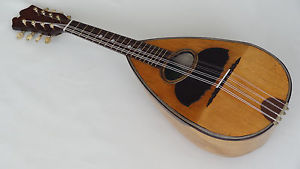
Mandolin Raffaele Esposito 1895 Restored
Estimated price for orientation: 450 $
Category: Mandolins
Class:
Description Brand: Raffaele Esposito Right-/ Left-Handed: Right Handed MPN: Does Not Apply Items Included: Case Number of Strings: 8 Country/Region of Manufacture: Italy Body Style: Bowl Back Type: Acoustic EAN: Does not apply
Raffaele Esposito, son of Giovani Esposito worked as Violin Maker between 1883(?!)-1894 (then 1895 - 1910 Mandolin Maker). Often mentioned alongside Vinaccia and Calace as a important instrument maker for Napoli, according to sources he was usually making Gagliano style violins but as modern copies labeled "Raffaele Esposito in Napoli anno 18888" were being made, it suggests he must have been making viloins in own style as well. Karel Jalovec in his book Italian Violin Makers mentions same label but under name Giosue Esposito (then aforementioned label under it) - Mandolin Maker 1890-1900 but in my opinion he has mistaken Giosue with Giovanni his father not Raffaele himself, also dates given are unprecise as instruments with labels dated as early as 1869 (Viola listed on auction in 2011) and as late as 1906 (mandolin) were found. As in late 19th century Neapolitan Violin makers started to struggle selling their instruments due to many old instruments being available on market and with Germany making cheaper and good sounding instruments in places such as Markneukirchen, they had to seek other opportunities to make a living out of building instruments. As at that time mandolin was at the beginning of it's golden age it was easily understandable why so many violin makers focused more on mandolins. So was Esposito, first making his own mandolins at Vico Lungo Pontecorvo 27 Napoli around 1890's, but later has become a student of Vinaccia continued making Mandolins until late 1900's (mandolin with label dated 1906 has addition of "Allievi di Vinaccia" but still at same address). There is an easily distinguishable difference between two mandolin mentioned. The one dated 1895 has "premium" parts used - Brass tailpiece and brass tuners with button having ornate lead covers, bowl is slightly larger and deeper. Latter one, made under Vinaccia eye is very similar to all other mandolins made under "Allievi di Vinaccia" (Maratea, Rubino, D'Isanto and Fratelli Gaetano & Achille Vinaccia themselves) all having same parts, most likely drawings and templets, basically using same source of materials. It is possible that students were obliged to use parts and materials sold/sourced by Vinaccias if they were to use their name on the label. There were two brothers Gaetano and Pasquale Esposito also Vinaccia students at that time but it is not known if there if any family connection to Raffaele Esposito. About the instrument itself, I was very amazed when finally got to play the instrument as how well it sounds, it has beautiful rich, deep and ringing tone and best intonation I have come across on a bowl backed mandolin from that period. As mentioned before this instrument was made before he has worked with Vinaccia family and although it seems lacking precision in some aesthetic elements Esposito had used his knowledge well in making well sounding mandolin. The bowl is made of 15 maple ribs and is slightly larger than similar Vinaccia mandolin, it is more similar to Calace mandolins with the bowl deeper towards the neck. The Soundboard is well selected thin spruce which produces good volume and sustain, the angle of the neck is parallel to the soundboard which allows low and comfortable while having thin fingerboard and what goes with it thinner neck. It was one of the more difficult repairs I've done so far which required complete removal of table in order to bring it back to original shape, the purfling has been replaced, fretboard completely re-fretted with T bar brass wire, tuners cleaned and lubed, tail piece cleaned and polished, whole body was gently sanded using fine to micro fine grades sanding sponge. Bowl and neck has gloss shellac finish where as table has little shellac polished to mat, in a all over appearance I was aiming at refreshing finish whilst maintaining antique character. Original bridge was beyond repair so I have made a copy using ebony and cattle bone, also new pin was made in place of hook on head (though it'll serve as ornament not a hanger). Mandolin is fitted with new set of Pyramid Silver wound strings (.009-.032), also comes with case
For sound sample please see following links to videos made using this mandolin:https://www.youtube.com/watch?v=kQoR_07SOoshttps://www.youtube.com/watch?v=qqQHlfv6-5I
Measurements to followI am a luthier and musician so if you have any questions about the instrument please feel free to ask.
I have plenty of other restoration projects on my website www.lucassobieranski.com with recordings made on many mandolins so you can compare the sound.Free sheet music on purchase.
A PDF copy of my own compositions for mandolin will be sent via email if desired – for audio go to souncloud.com/lucas_sobieranskiIf you'd like to receive an advice on maintenance and set-up I will also provide you with it if requested.Returns accepted but at buyers cost Free postage UK only Overseas buyers please contact me first for postage price quote (international sale and discounts only through website www.lucassobieranski.com)Local collection and prior inspection welcome in South Manchester Thank you
Description
| Brand: | Raffaele Esposito | Right-/ Left-Handed: | Right Handed |
| MPN: | Does Not Apply | Items Included: | Case |
| Number of Strings: | 8 | Country/Region of Manufacture: | Italy |
| Body Style: | Bowl Back | Type: | Acoustic |
| EAN: | Does not apply |
Raffaele Esposito, son of Giovani Esposito worked as Violin Maker between 1883(?!)-1894 (then 1895 - 1910 Mandolin Maker). Often mentioned alongside Vinaccia and Calace as a important instrument maker for Napoli, according to sources he was usually making Gagliano style violins but as modern copies labeled "Raffaele Esposito in Napoli anno 18888" were being made, it suggests he must have been making viloins in own style as well. Karel Jalovec in his book Italian Violin Makers mentions same label but under name Giosue Esposito (then aforementioned label under it) - Mandolin Maker 1890-1900 but in my opinion he has mistaken Giosue with Giovanni his father not Raffaele himself, also dates given are unprecise as instruments with labels dated as early as 1869 (Viola listed on auction in 2011) and as late as 1906 (mandolin) were found. As in late 19th century Neapolitan Violin makers started to struggle selling their instruments due to many old instruments being available on market and with Germany making cheaper and good sounding instruments in places such as Markneukirchen, they had to seek other opportunities to make a living out of building instruments. As at that time mandolin was at the beginning of it's golden age it was easily understandable why so many violin makers focused more on mandolins. So was Esposito, first making his own mandolins at Vico Lungo Pontecorvo 27 Napoli around 1890's, but later has become a student of Vinaccia continued making Mandolins until late 1900's (mandolin with label dated 1906 has addition of "Allievi di Vinaccia" but still at same address). There is an easily distinguishable difference between two mandolin mentioned. The one dated 1895 has "premium" parts used - Brass tailpiece and brass tuners with button having ornate lead covers, bowl is slightly larger and deeper. Latter one, made under Vinaccia eye is very similar to all other mandolins made under "Allievi di Vinaccia" (Maratea, Rubino, D'Isanto and Fratelli Gaetano & Achille Vinaccia themselves) all having same parts, most likely drawings and templets, basically using same source of materials. It is possible that students were obliged to use parts and materials sold/sourced by Vinaccias if they were to use their name on the label. There were two brothers Gaetano and Pasquale Esposito also Vinaccia students at that time but it is not known if there if any family connection to Raffaele Esposito. About the instrument itself, I was very amazed when finally got to play the instrument as how well it sounds, it has beautiful rich, deep and ringing tone and best intonation I have come across on a bowl backed mandolin from that period. As mentioned before this instrument was made before he has worked with Vinaccia family and although it seems lacking precision in some aesthetic elements Esposito had used his knowledge well in making well sounding mandolin. The bowl is made of 15 maple ribs and is slightly larger than similar Vinaccia mandolin, it is more similar to Calace mandolins with the bowl deeper towards the neck. The Soundboard is well selected thin spruce which produces good volume and sustain, the angle of the neck is parallel to the soundboard which allows low and comfortable while having thin fingerboard and what goes with it thinner neck. It was one of the more difficult repairs I've done so far which required complete removal of table in order to bring it back to original shape, the purfling has been replaced, fretboard completely re-fretted with T bar brass wire, tuners cleaned and lubed, tail piece cleaned and polished, whole body was gently sanded using fine to micro fine grades sanding sponge. Bowl and neck has gloss shellac finish where as table has little shellac polished to mat, in a all over appearance I was aiming at refreshing finish whilst maintaining antique character. Original bridge was beyond repair so I have made a copy using ebony and cattle bone, also new pin was made in place of hook on head (though it'll serve as ornament not a hanger). Mandolin is fitted with new set of Pyramid Silver wound strings (.009-.032), also comes with case
For sound sample please see following links to videos made using this mandolin:https://www.youtube.com/watch?v=kQoR_07SOoshttps://www.youtube.com/watch?v=qqQHlfv6-5I
Measurements to followI am a luthier and musician so if you have any questions about the instrument please feel free to ask.
I have plenty of other restoration projects on my website www.lucassobieranski.com with recordings made on many mandolins so you can compare the sound.Free sheet music on purchase.
A PDF copy of my own compositions for mandolin will be sent via email if desired – for audio go to souncloud.com/lucas_sobieranskiIf you'd like to receive an advice on maintenance and set-up I will also provide you with it if requested.Returns accepted but at buyers cost Free postage UK only Overseas buyers please contact me first for postage price quote (international sale and discounts only through website www.lucassobieranski.com)Local collection and prior inspection welcome in South Manchester Thank you
For sound sample please see following links to videos made using this mandolin:https://www.youtube.com/watch?v=kQoR_07SOoshttps://www.youtube.com/watch?v=qqQHlfv6-5I
Measurements to followI am a luthier and musician so if you have any questions about the instrument please feel free to ask.
I have plenty of other restoration projects on my website www.lucassobieranski.com with recordings made on many mandolins so you can compare the sound.Free sheet music on purchase.
A PDF copy of my own compositions for mandolin will be sent via email if desired – for audio go to souncloud.com/lucas_sobieranskiIf you'd like to receive an advice on maintenance and set-up I will also provide you with it if requested.Returns accepted but at buyers cost Free postage UK only Overseas buyers please contact me first for postage price quote (international sale and discounts only through website www.lucassobieranski.com)Local collection and prior inspection welcome in South Manchester Thank you