Back to the main page Back to category Samplers and Sequencers
musical instrument details
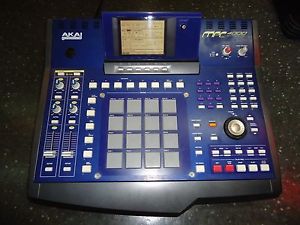
AKAI MPC 4000BL Plus DRUM SAMPLER Internal HD/CD USB . PADS excellent! Great!
Estimated price for orientation: 900 $
Category: Samplers and Sequencers
Class:
Description Brand: AKAI Model: AKAI MPC 4000 BL Plus MPN: Does Not Apply UPC: 825213002210
AKAI MPC 4000 BL PlusVer 1.71Internal Hard Drive (74GB)USB PortCD 272 MB RamAkai's MPC sampling workstations have been a studio fixture for nearly 15 years, and the MPC4000 is the most powerful one yet.MPC stands for MIDI Production Centre, and if you've ever thought that these machines are just an Akai sampler in a different-shaped box with some rubber pads on top, then it's helpful to keep this in mind. The Akai manual encourages the lucky purchaser to think of the latest carrier of the MPC gene, the MPC4000, as three separate modules — a sampler, a sequencer and a set of pads/controllers. This is not just a shorthand way of explaining the main areas of the MPC4000's operation — it summarises why the MPC concept adds up to more than a sampling drum machine. So yes, the pads and other real-time controls can be used to trigger and manipulate the onboard samples, but they can also be routed to a MIDI Out and simply used to play an external module or interact with an external sequencer. Similarly, the MPC4000's sequencer is equally at home recording your tappings on the pads or information arriving at one of the two MIDI ports. And when it comes to the opposite direction of travel, the MPC4000's four, separately addressable MIDI outs, give you 64 channels of information with which to control external modules alongside the internal sampler. The sum of the parts, then, is a machine that can act both as a self-contained music-production station and as the hub of a more complex MIDI sequencing setup. Rather as you might use a typical computer-based system, you could say. And you'd be right — this is the kind of ballpark in which the MPC is designed to swing its bat. Except that devotees have always argued that their MPCs have offered at least three major advantages over computer-based solutions. One: they provide dedicated features that make light work of manipulating drum sounds and loop-based material. Two: they give you the reliable MIDI timing that is usually associated with hardware sequencers. Three: as a standalone piece of hardware, they are much more suited to the rigours of live work.
Description
| Brand: | AKAI | Model: | AKAI MPC 4000 BL Plus |
| MPN: | Does Not Apply | UPC: | 825213002210 |
AKAI MPC 4000 BL PlusVer 1.71Internal Hard Drive (74GB)USB PortCD 272 MB RamAkai's MPC sampling workstations have been a studio fixture for nearly 15 years, and the MPC4000 is the most powerful one yet.MPC stands for MIDI Production Centre, and if you've ever thought that these machines are just an Akai sampler in a different-shaped box with some rubber pads on top, then it's helpful to keep this in mind. The Akai manual encourages the lucky purchaser to think of the latest carrier of the MPC gene, the MPC4000, as three separate modules — a sampler, a sequencer and a set of pads/controllers. This is not just a shorthand way of explaining the main areas of the MPC4000's operation — it summarises why the MPC concept adds up to more than a sampling drum machine. So yes, the pads and other real-time controls can be used to trigger and manipulate the onboard samples, but they can also be routed to a MIDI Out and simply used to play an external module or interact with an external sequencer. Similarly, the MPC4000's sequencer is equally at home recording your tappings on the pads or information arriving at one of the two MIDI ports. And when it comes to the opposite direction of travel, the MPC4000's four, separately addressable MIDI outs, give you 64 channels of information with which to control external modules alongside the internal sampler. The sum of the parts, then, is a machine that can act both as a self-contained music-production station and as the hub of a more complex MIDI sequencing setup. Rather as you might use a typical computer-based system, you could say. And you'd be right — this is the kind of ballpark in which the MPC is designed to swing its bat. Except that devotees have always argued that their MPCs have offered at least three major advantages over computer-based solutions. One: they provide dedicated features that make light work of manipulating drum sounds and loop-based material. Two: they give you the reliable MIDI timing that is usually associated with hardware sequencers. Three: as a standalone piece of hardware, they are much more suited to the rigours of live work.