Back to the main page Back to category String
musical instrument details
Good and Rare Antique English Violin-workshop of James and Henry Banks-No Reserv
Estimated price for orientation: 1 136 $
Category: String
Class:
Description Type: Acoustic Age: 1808 Size: 4/4 13 15/16 inches or 355mm back length Maker: James Banks Skill Level: Advanced Origin: Salisbury, England Country/Region of Manufacture: United Kingdom MPN: Does Not Apply
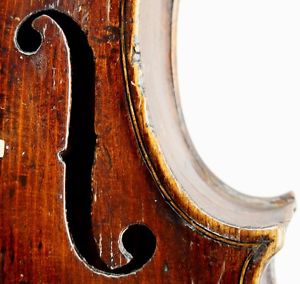
This very good and rare antique English violin from the workshop of James and Henry Banks
is offered to the highest bidder with no reserve.The violin bears the old and barely legible label of the maker.James Banks was born in 1756 and was the son of England's most famous and celebrated violin maker, Benjamin Banks. He was taught by his father and apprenticed in his father's shop until the elder's death in 1795. He worked together with his brother Henry who was a pianoforte maker and tuner and instrument merchant. They relocated to Liverpool around 1811. Jame's Banks violins understandably bear significant resemblance to those of the father including the color and texture of varnish, the style of execution and the model. It is interesting to note that in "British Violin Makers, Classical and Modern" Rev Wm Meredith Morris writes about the habit several of the top British makers had of mix-matching their materials. It is clear the left side of the back of this violin is from different wood than the right.
Nor were they at all times
over particular about matching their wood. I have
seen fine examples of Duke and Forster with an odd
rib, cut the wrong way of the grain to match the
other ribs. Mr. Richard Hilton, of Matlock Bridge,
possesses a genuine Daniel Parker, date 1712, with
the right upper rib cut differently from the rest.
There is, or was, in the possession of H. Seymour
Allen, Esq., of Cresselly House, Pembroke, a beauti-
ful Duke fiddle with a joint back, the wood of the
left half being of a broad curl, and that of the other
of a narrow, regular curl. A Mr. O'Connor, residing
in Waterford, has a Benjamin Banks tenor in excellent
preservation, the ribs of which have been cut from
three different pieces of timber varying in width of
curl. Many specimens of Matthew Hardie show three
different kinds of figure in scroll, ribs, and back.
These are isolated cases, but instances might be multi-
plied indefinitely. The English scrolls show much
strength and decision. Curiously enough those of
Benjamin Banks, our recognised chief, are somewhat
THE CLASSICAL SCHOOL 17
weak in design and execution. Richard Tobin cut
scrolls which vie with the best work of Stradivari,
but the poor man has been robbed of his due by an
unscrupulous posterity. Dealers, perceiving the aristo-
cratic bearing of the heads, have ruthlessly decapitated
them in most instances and put them on democratic
shoulders.The following can be found in Tarisio's Cozio archives
Violin maker
James and Henry Banks (1758-1831 and 1770-1830) assisted their father,
until his death in 1795, and continued his business in Salisbury until
1811 before moving to Liverpool where they worked until 1831. Although
instruments are labelled to indicate a partnership between the two
brothers, Henry’s skills involved the
pianoforte, and signatures inside these instruments reveal that James
was the only maker. Distinguishing between the work of Benjamin Banks
and James is to an extent academic because they continued the same
tradition from father to son, and because many of the instruments sold
by the two brothers appear to be stock, or comprise parts inherited from
their father. Nevertheless, later instruments including those made in
Salisbury from about 1790 have a more transparent varnish closer to
London work of the same period and in contrast to the milky and opaque
varnish used earlier. Likewise scrolls tend to be crisper and
classically cut, contrasting with the rounded chamfers and deep
undercutting that typifies Benjamin Banks, and in the final years before
his death in 1795 the contrasting hands of father and son can be seen
of different instruments. Their work is relatively rare, often
unlabelled and unstamped, and made to varying degrees of quality. To
complicate matters further, many instruments were unfinished upon his
death in 1831, and were sold into the London trade to be completed. At
his best, surviving works hint that James was a superior maker than his
more famous father. This is an authentic violin from the workshop of James and Henry Banks. It is over 200 years old and has the repairs and battle scars as a result of old age and use. There are a few well-repaired cracks to the top, a button repair, some rib repairs, and a grafted and bushed peg box. The back is free of any damages or repairs. All of the rapirs to this violin are old and stable. Seams have all been checked and glued as needed The violin has been expertly set up including a new custom
Description
| Type: | Acoustic | Age: | 1808 |
| Size: | 4/4 13 15/16 inches or 355mm back length | Maker: | James Banks |
| Skill Level: | Advanced | Origin: | Salisbury, England |
| Country/Region of Manufacture: | United Kingdom | MPN: | Does Not Apply |
This very good and rare antique English violin from the workshop of James and Henry Banks
is offered to the highest bidder with no reserve.
is offered to the highest bidder with no reserve.
The violin bears the old and barely legible label of the maker.James Banks was born in 1756 and was the son of England's most famous and celebrated violin maker, Benjamin Banks. He was taught by his father and apprenticed in his father's shop until the elder's death in 1795. He worked together with his brother Henry who was a pianoforte maker and tuner and instrument merchant. They relocated to Liverpool around 1811. Jame's Banks violins understandably bear significant resemblance to those of the father including the color and texture of varnish, the style of execution and the model. It is interesting to note that in "British Violin Makers, Classical and Modern" Rev Wm Meredith Morris writes about the habit several of the top British makers had of mix-matching their materials. It is clear the left side of the back of this violin is from different wood than the right.
Nor were they at all times over particular about matching their wood. I have seen fine examples of Duke and Forster with an odd rib, cut the wrong way of the grain to match the other ribs. Mr. Richard Hilton, of Matlock Bridge, possesses a genuine Daniel Parker, date 1712, with the right upper rib cut differently from the rest. There is, or was, in the possession of H. Seymour Allen, Esq., of Cresselly House, Pembroke, a beauti- ful Duke fiddle with a joint back, the wood of the left half being of a broad curl, and that of the other of a narrow, regular curl. A Mr. O'Connor, residing in Waterford, has a Benjamin Banks tenor in excellent preservation, the ribs of which have been cut from three different pieces of timber varying in width of curl. Many specimens of Matthew Hardie show three different kinds of figure in scroll, ribs, and back. These are isolated cases, but instances might be multi- plied indefinitely. The English scrolls show much strength and decision. Curiously enough those of Benjamin Banks, our recognised chief, are somewhat THE CLASSICAL SCHOOL 17 weak in design and execution. Richard Tobin cut scrolls which vie with the best work of Stradivari, but the poor man has been robbed of his due by an unscrupulous posterity. Dealers, perceiving the aristo- cratic bearing of the heads, have ruthlessly decapitated them in most instances and put them on democratic shoulders.The following can be found in Tarisio's Cozio archives
Violin maker
James and Henry Banks (1758-1831 and 1770-1830) assisted their father, until his death in 1795, and continued his business in Salisbury until 1811 before moving to Liverpool where they worked until 1831. Although instruments are labelled to indicate a partnership between the two brothers, Henry’s skills involved the pianoforte, and signatures inside these instruments reveal that James was the only maker. Distinguishing between the work of Benjamin Banks and James is to an extent academic because they continued the same tradition from father to son, and because many of the instruments sold by the two brothers appear to be stock, or comprise parts inherited from their father. Nevertheless, later instruments including those made in Salisbury from about 1790 have a more transparent varnish closer to London work of the same period and in contrast to the milky and opaque varnish used earlier. Likewise scrolls tend to be crisper and classically cut, contrasting with the rounded chamfers and deep undercutting that typifies Benjamin Banks, and in the final years before his death in 1795 the contrasting hands of father and son can be seen of different instruments. Their work is relatively rare, often unlabelled and unstamped, and made to varying degrees of quality. To complicate matters further, many instruments were unfinished upon his death in 1831, and were sold into the London trade to be completed. At his best, surviving works hint that James was a superior maker than his more famous father. This is an authentic violin from the workshop of James and Henry Banks. It is over 200 years old and has the repairs and battle scars as a result of old age and use. There are a few well-repaired cracks to the top, a button repair, some rib repairs, and a grafted and bushed peg box. The back is free of any damages or repairs. All of the rapirs to this violin are old and stable. Seams have all been checked and glued as needed The violin has been expertly set up including a new custom
Nor were they at all times over particular about matching their wood. I have seen fine examples of Duke and Forster with an odd rib, cut the wrong way of the grain to match the other ribs. Mr. Richard Hilton, of Matlock Bridge, possesses a genuine Daniel Parker, date 1712, with the right upper rib cut differently from the rest. There is, or was, in the possession of H. Seymour Allen, Esq., of Cresselly House, Pembroke, a beauti- ful Duke fiddle with a joint back, the wood of the left half being of a broad curl, and that of the other of a narrow, regular curl. A Mr. O'Connor, residing in Waterford, has a Benjamin Banks tenor in excellent preservation, the ribs of which have been cut from three different pieces of timber varying in width of curl. Many specimens of Matthew Hardie show three different kinds of figure in scroll, ribs, and back. These are isolated cases, but instances might be multi- plied indefinitely. The English scrolls show much strength and decision. Curiously enough those of Benjamin Banks, our recognised chief, are somewhat THE CLASSICAL SCHOOL 17 weak in design and execution. Richard Tobin cut scrolls which vie with the best work of Stradivari, but the poor man has been robbed of his due by an unscrupulous posterity. Dealers, perceiving the aristo- cratic bearing of the heads, have ruthlessly decapitated them in most instances and put them on democratic shoulders.The following can be found in Tarisio's Cozio archives
Violin maker
James and Henry Banks (1758-1831 and 1770-1830) assisted their father, until his death in 1795, and continued his business in Salisbury until 1811 before moving to Liverpool where they worked until 1831. Although instruments are labelled to indicate a partnership between the two brothers, Henry’s skills involved the pianoforte, and signatures inside these instruments reveal that James was the only maker. Distinguishing between the work of Benjamin Banks and James is to an extent academic because they continued the same tradition from father to son, and because many of the instruments sold by the two brothers appear to be stock, or comprise parts inherited from their father. Nevertheless, later instruments including those made in Salisbury from about 1790 have a more transparent varnish closer to London work of the same period and in contrast to the milky and opaque varnish used earlier. Likewise scrolls tend to be crisper and classically cut, contrasting with the rounded chamfers and deep undercutting that typifies Benjamin Banks, and in the final years before his death in 1795 the contrasting hands of father and son can be seen of different instruments. Their work is relatively rare, often unlabelled and unstamped, and made to varying degrees of quality. To complicate matters further, many instruments were unfinished upon his death in 1831, and were sold into the London trade to be completed. At his best, surviving works hint that James was a superior maker than his more famous father. This is an authentic violin from the workshop of James and Henry Banks. It is over 200 years old and has the repairs and battle scars as a result of old age and use. There are a few well-repaired cracks to the top, a button repair, some rib repairs, and a grafted and bushed peg box. The back is free of any damages or repairs. All of the rapirs to this violin are old and stable. Seams have all been checked and glued as needed The violin has been expertly set up including a new custom